Showing posts with label Impaired waters. Show all posts

Saturday, March 17, 2018

FAQ: What Is "Residual Designation Authority"?

FAQ: What is EPA's Residual Designation Authority?

EPA can use its "residual designation" authority under 40 CFR 122.26(a)(9)(i)(C) and (D) to require NPDES permits for stormwater discharges or other category of discharges on a case-by-case basis when it determines that:
  • the discharges contribute to a violation of water quality standards,,
  • are a significant contributor of pollutant to federally protected surface waters, or
  • controls are needed for the discharge based on wasteload allocations that are part of "total maximum daily loads" (TMDLs) that address the pollutant(s) of concern.

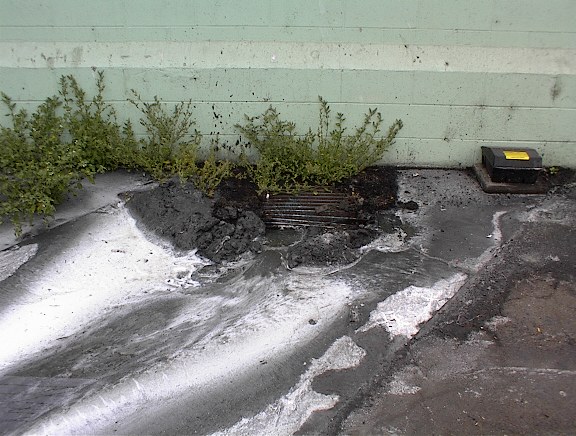
Industrial Waste Discharge To Storm Sewer Identified During SWPPP inspection
Industrial Waste Discharge To Storm Sewer


Caltha LLP provides expert consulting services to public and private sector clients nationwide to address water quality standards, wastewater permitting and assessing potential impacts of chemicals in the aquatic environment.
Caltha LLP Aquatic Toxicology / WQ Standards Services Website

Wednesday, May 15, 2013

PADEP List of Impaired Waters Approved For 2012

The U.S. Environmental Protection Agency has approved Pennsylvania’s 2012 final list of impaired waters. The list is part of a bi-annual monitoring and assessment report characterizing the condition of Pennsylvania’s surface waters. The 2012 list submitted by the Pennsylvania Department of Environmental Protection (PADEP) contains 7,009 impaired waters, of which 263 are newly listed including portions of Buffalo Creek and Plum Creek in the Upper Juniata watershed. The list also includes more than 650 stream miles within the Susquehanna River Basin that were added or updated in the 2012 list. The new list removes 39 water bodies that were on the previous list including over 96 miles in the Upper Susquehanna-Lackawanna basin and 27 miles of the Lehigh River.

The final report includes a change in the designation for a nearly 100-mile section of the main stem of the Susquehanna River from “unimpaired” for aquatic life and recreational uses, to having insufficient water quality data to make an impairment determination. That change from the draft to the final report reflects comments submitted to PADEP from EPA and others, as well as ongoing efforts to identify the cause of health impacts to the Susquehanna’s smallmouth bass population. PADEP initiated a special study of the fish health problem in 2012 and is continuing its data collection efforts in 2013 to further assess water quality in the Susquehanna River and its major tributaries, and identify the cause(s) for the decline in smallmouth bass. While these steps are underway, the Chesapeake Bay TMDL and accompanying Pennsylvania Watershed Implementation Plans require action to reduce nitrogen, phosphorus and sediment pollution within the Susquehanna watershed.

Caltha LLP provides expert consulting services to public and private sector clients in Pennsylvania and  nationwide to address water quality standards, wastewater permitting and assessing potential impacts of chemicals in the aquatic environment.

Caltha LLP Aquatic Toxicology / WQ Standards Services Website


Tuesday, April 30, 2013

Final 2012 Iowa Impaired Waters Listing Approved By USEPA

In an April 24, 2013 decision letter, US EPA has approved Iowa’s 2012 list of impaired waters requiring Total Maximum Daily Load (TMDL) calculations. The Iowa Department Natural Resources (IDNR) submitted its impaired waters list to EPA on April 1, 2013, for review and approval as required by the Clean Water Act.

In its decision, EPA approved the removal of 73 water bodies and the addition of 78 water bodies to the Iowa list of impaired waters. The action brings the total number of impaired waters on the state’s list to 479.

As background, a water body is placed on the impaired waters list when monitoring finds that pollutant levels prevent the lake, river, or stream from attaining its beneficial uses. A water body can be removed from the list if it meets its beneficial uses or if a pollution reduction plan (TMDL) for a water body is approved by EPA. Beneficial uses in Iowa include human recreation, water supply, and maintaining healthy aquatic life.

Caltha LLP provides expert consulting services to public and private sector clients in Iowa and nationwide to address water quality standards, wastewater permitting and assessing potential impacts of chemicals in the aquatic environment.
Caltha LLP Aquatic Toxicology / WQ Standards Services Website


Wednesday, March 27, 2013

National Rivers and Stream Assessment Report Released

U.S. Environmental Protection Agency has released the 2008-2009 National Rivers and Stream Assessment. The survey looked at the health of thousands of stream and river miles across the country, and reported that about 55% are in poor condition for aquatic life. The report findings include:

  • Nitrogen and phosphorus are at excessive levels. An estimated 27% of the nation’s rivers and streams have excessive levels of nitrogen, and 40% have high levels of phosphorus.
  • Streams and rivers are at an increased risk due to decreased vegetation cover and increased human disturbance. These conditions can cause streams and rivers to be more vulnerable to flooding, erosion, and pollution. Approximately 24% of the rivers and streams monitored were rated poor due to the loss of healthy vegetative cover.
  • Increased bacteria levels. High bacteria levels were found in 9% of stream and river miles making those waters potentially unsafe for swimming and other recreation.
  • Increased mercury levels. More than 13,000 miles of rivers have fish with mercury levels that may be unsafe for human consumption.

Caltha LLP provides expert consulting services to public and private sector clients nationwide to address water quality standards, wastewater permitting and assessing potential impacts of chemicals in the aquatic environment.
Caltha LLP Aquatic Toxicology / WQ Standards Services Website


Monday, March 25, 2013

EPA Adds Impaired Waters To West Virginia 303D List

The U.S. Environmental Protection Agency has responded to the West Virginia Department of Environmental Protection (WVDEP) proposed list of impaired waterways in West Virginia. The list includes 1,176 waterways previously designated as impaired by the State, and an additional 255 waterways identified by EPA, based on the State’s current water quality standards.

In its response, EPA acknowledged WVDEP’s position that it is precluded by Senate Bill No. 562 from evaluating waters for aquatic life uses pending adoption of a new methodology for evaluating waterways. EPA identified the additional waterways, representing more than 1,000 miles of rivers and streams, based on its review of readily available State data. The agency reviewed the information using substantially the same methodology that West Virginia has used to review this type of data in the past.

EPA will publish a notice of the proposed additions in the federal register on or before April 15, which will begin a 30-day public comment period. EPA will review all of the comments and make changes to the proposed list as appropriate.

Caltha LLP provides expert consulting services to public and private sector clients nationwide to address water quality standards, wastewater permitting and assessing potential impacts of chemicals in the aquatic environment.
Caltha LLP Aquatic Toxicology / WQ Standards Services Website


Wednesday, March 13, 2013

Water Standards For Selenium Proposed In Kentucky

The Kentucky Division of Water has been conducting the triennial review of the state’s water quality standards since early 2012. Recently, the agency had proposed regulations address a number of changes to the water quality standards and included proposed deletion of the acute water quality criterion for selenium.

The proposal to delete the acute standard was based on the Division’s findings that the current state standard, which was derived from USEPA guidance, was not based on sound science. USEPA Region 4 commented on the proposed deletion and identified three options: (1) leave the current acute criterion in place and wait for release of any revisions to USEPA’s selenium criteria, (2) adopt the acute criterion from USEPA’s current national guidance, or (3) adopt an alternate criterion based on other scientifically defensible guidance.

In response, the Division conducted a survey of recent studies of selenium toxicity to aquatic species and determined that it was appropriate to develop state-specific water quality criteria for selenium. The agency is proposing an acute criterion for warmwater aquatic habitat of 258 ug/L, with an alternate calculation option depending on the sulfate concentration that is present. The proposed chronic criterion for warmwater aquatic habitat is 8.6 ug/g (dry weight) of whole fish tissue or 19.2 ug/g (dry weight) of fish egg/ovary tissue. The analysis of fish tissue is triggered when the water column concentration of selenium exceeds 5.0 ug/L. If the water column result is less than or equal to 5.0 ug/L, the water body is meeting is aquatic life uses. If the water column result is greater than 5.0 ug/L, then the next step is to determine whether the site is attaining the fish tissue or egg/ovary tissue criterion.

Caltha LLP provides expert consulting services to public and private sector clients nationwide to address water quality standards, wastewater permitting and assessing potential impacts of chemicals in the aquatic environment.

Caltha LLP Aquatic Toxicology / WQ Standards Services Website


Changes Considered To Minnesota Water Quality Regulations

The Minnesota Pollution Control Agency is proposing to make some revisions to Minnesota Rules Chapters 7050, 7052 and 7053. The amendments proposed for this rulemaking are the result of the 2008 public review of Minnesota’s water quality standards. The scope of this rulemaking will address six areas of the water quality standards:
  1. River Eutrophication — numeric nutrient standards for rivers, streams, the Mississippi River pools and Lake Pepin.
  2. Total Suspended Solid (TSS) — replacement of the existing standard for water turbidity with more scientifically accurate, region-specific TSS standards.
  3. Human Health Methods — updates to the methods used for establishing the Class 2 chronic water quality standards to protect human health.
  4. Process for listing Class 2A waters as cold water communities/trout waters — refine the current basis for classifying Class 2A waters to also include biological information on the aquatic communities.
  5. Class 3 Waters — update the basis for identifying Class 3 waters and remove the numeric standards.
  6. Other changes to use classifications — regular review and updates to Class 1 and Class 7 Limited Resource Value Waters.
The MPCA anticipates to conduct public informational meetings in Summer 2013 and to publish proposed rules in Fall 2013. Final rules would be effective in Spring 2014

Caltha LLP provides expert consulting services to public and private sector clients in Minnesota and nationwide to address water quality standards, wastewater permitting and assessing potential impacts of chemicals in the aquatic environment.

Caltha LLP Aquatic Toxicology / WQ Standards Services Website


Thursday, March 7, 2013

Antidegradation Requirements For Discharges To Wisconsin Impaired Waters

The Wisconsin Department of Natural Resources has released its draft guidance document “TMDL Development and Implementation Guidance: Integrating the WPDES and Impaired Waters Programs” for a 21-day public comment period. In addition to providing a framework for developing and implementing permit limits for discharges to 303d listed impaired waters, the draft guidance also addresses the WDNR approach to antidegradation requirements.

Under the draft guidance, if the new TMDL-derived limit results in an increase in an effective existing limit in a permit, then an antidegradation evaluation is needed. The initial imposition of a water quality-based effluent limit, which include TMDL-derived limits, does not require an antidegradation evaluation as long as the pollutant of concern was previously present in the discharge and the permittee is not proposing an increased load to the receiving water . According to the WDNR, possible exceptions include the initial imposition of a TMDL-derived limit for a discharge to Exceptional and Outstanding Resource Waters, for a bioaccumulative chemical of concern such as mercury when an increased discharge is proposed, and when a change in discharge location is proposed.

With a few exceptions, Wisconsin chapter NR 207 requires an antidegradation evaluation when a new or increased discharge is proposed. Therefore, an antidegradation evaluation is necessary before a TMDL-derived limit, which has been incorporated into a WPDES permit and has become effective, is increased or the TMDL-derived limit replaces a less restrictive effective effluent limit.

Caltha LLP provides expert consulting services to public and private sector clients in Wisconsin and nationwide to address water quality standards, wastewater permitting and assessing potential impacts of chemicals in the aquatic environment.
Caltha LLP Aquatic Toxicology / WQ Standards Services Website


Friday, December 21, 2012

Antidegradation Requirements and Impaired Waters Requirements Under Draft MDA Storm Water Permit

Maryland Department of the Environment (MDA) is issuing a draft General Permit Number 12-SW of stormwater discharges from industrial facilities. MDA has chosen to base the state’s permit on the EPA’s Multi-Sector General Permit (MSGP). The final permit is expected to be issued in early 2013.

Read a summary of the key changes to the Maryland General Permit.

Information about Maryland General Permit SWPPP Template and Compliance Plan

The draft permit contains new, specific WQBEL requirements applicable to impaired waters and antidegradation policies:

  • Discharges to Impaired Waters – The permit contains requirements for new and existing discharges to impaired waters with or without EPA approved or established TMDLs. New dischargers are only eligible for discharge authorization if they demonstrate that there is either no exposure of stormwater to the pollutant for which the water is impaired, or the impairment pollutant is not present at the facility, or that the discharge is not expected to cause or contribute to a water quality standards exceedance. For existing discharges to impaired waters with State approved or established TMDLs, MDA will determine if more stringent requirements are necessary to ensure that the permittee is discharging consistent with the TMDL and applicable WLA.
  • Antidegradation Requirements – MDA has clarified its expectation of operators to meet antidegradation requirements as part of the permit authorization process as well as to comply with permit provisions after authorization to discharge is received. If an NOI indicates that an operator is seeking coverage for a new discharge to a Tier 2 water, MDA will determine if additional requirements are necessary to be consistent with the applicable antidegradation requirements, or if alternatively, an individual permit application is necessary. New dischargers are no longer eligible for coverage under this permit for discharges to waters designated as Tier 3 for antidegradation purposes.

Caltha LLP provides expert consulting services to public and private sector clients nationwide to address water quality standards, wastewater permitting and assessing potential impacts of chemicals in the aquatic environment.
Caltha LLP Aquatic Toxicology / WQ Standards Services Website


Tuesday, December 18, 2012

Wildrice - Sulfate Standard Upheld By Court

The Minnesota Court of Appeals has affirmed a lower-court ruling that upholds the state's limit on sulfate in wild rice waters. In its decision, the appellate court said it lacked jurisdiction in the case but that it still affirmed a state district court decision in May to dismiss the case.

 The original lawsuit was filed by the Minnesota Chamber of Commerce in 2010 asking the court to throw out the state's 1973 sulfate rule, claiming it was unfounded, based on poor science and overly restrictive, especially for the state's mining industry. In May 2012, a district court judge ruled in favor of the state, the state sulfate limit of 10 mg/L was appropriate.

The 10 mg/L limit also was the subject of a 2011 state law that attempted to block enforcement of the state regulation. But the federal Environmental Protection Agency overruled state lawmakers, saying the sulfate limit had to be enforced under the federal Clean Water Act unless the state could prove it wasn't necessary.

Caltha Water Quality and Water Quality Standards Consultant Services

Caltha LLP provides expert consulting services to public and private sector clients nationwide to address water quality standards, wastewater permitting and assessing potential impacts of chemicals in the aquatic environment.


Tuesday, November 27, 2012

New EPA Recreational Water Quality Criteria for Beaches

In response to an order from a U.S. District Court and as required by the Beaches Environmental Assessment and Coastal Health Act of 2000, the U.S. Environmental Protection Agency (EPA) has released new recreational water quality criteria for beaches and waters year round. The criteria provide states and communities with scientific information that they can use to determine whether water quality is safe for the public and when to issue an advisory or a beach closure. EPA has also provided a variety of other tools to help states evaluate and manage recreational waters.

The new criteria are based on several recent health studies and use a broader definition of illness to recognize that symptoms may occur without a fever, including a number of stomach ailments. EPA also narrowed from 90 days to 30 days the time period over which the results of monitoring samples may be averaged. This shortened time period especially accounts for heavy rainfall that can wash pollution into rivers, lakes or the ocean or cause sewer overflows.

The recommendations include:

  1. A short-term and long-term measure of bacteria levels that are to be used together to ensure that water quality is properly evaluated.
  2. Stronger recommendations for coastal water quality so public health is protected similarly in both coastal and fresh waters.
  3. A new rapid testing method that states can use to determine if water quality is safe within hours of water samples being taken.
  4. An early-alert approach for states to use to quickly issue swimming advisories for the public.
  5. Tools that allow states to predict water quality problems and identify sources of pollution, as well as to develop criteria for specific beaches.
  Caltha LLP provides expert consulting services to public and private sector clients nationwide to address water quality standards, wastewater permitting and assessing potential impacts of chemicals in the aquatic environment. Caltha LLP Aquatic Toxicology / WQ Standards Services Website


Iowa Nutrient Reduction Strategy Released

On November 19, 2012, the State of Iowa announced the release of the Iowa Nutrient Reduction Strategy for public comment. Interested parties were invited to submit comments during a 45 day comment period that will end on January 4, 2013.

The Iowa Nutrient Reduction Strategy is a science and technology-based approach to assess and reduce nutrients delivered to Iowa waterways and the Gulf of Mexico. The strategy outlines voluntary efforts to reduce nutrients in surface water from both point sources and nonpoint sources. The Iowa Department of Agriculture and Land Stewardship, Iowa Department of Natural Resources (DNR) worked with Iowa State University over a two-year period to develop the strategy.

The Iowa strategy has been developed in response to the 2008 Gulf Hypoxia Action Plan that calls for the 12 states along the Mississippi River to develop strategies to reduce nutrient loading to the Gulf of Mexico. The Iowa strategy follows the recommended framework provided by EPA in 2011. Iowa is the second state to complete a statewide nutrient reduction strategy.

To address point source discharges, such as POTW and industrial discharge, the Iowa Department of Natural Resources will be working with major facilities throughout the state to reduce nutrient discharges from point sources to Iowa's waters with a goal of reducing total phosphorus by 16% and total nitrogen by 4 %.

Summary of proposed permitting requirements for point source discharges under nutrient reduction plan


To address nutrient transport from nonpoint sources the strategy uses a scientific assessment of conservation practices and associated costs to reduce loading of nutrients to Iowa surface waters. The strategy identifies five key categories to focus the efforts in addressing nonpoint sources and identifies multiple action items within each category. The five categories are:

  • Setting Priorities;
  • Documenting Progress;
  • Research and Technology;
  • Strengthen Outreach,
  • Education,
  • Collaboration; and
  • Funding.

Caltha LLP provides expert consulting services to public and private sector clients nationwide to address water quality standards, wastewater permitting and assessing potential impacts of chemicals in the aquatic environment.

Caltha LLP Aquatic Toxicology / WQ Standards Services Website


Tuesday, November 20, 2012

Changes To Missouri Impaired Waters List

On Nov. 13, 2012 , US EPA Region 7 issued the final decision on the Missouri list of impaired waters. EPA restored eight water bodies to Missouri’s list and removed one water body due to an EPA-approved pollution reduction plan. The EPA decision brings the total number of impaired waters in the state to 258.

The Missouri Department of Natural Resources (MDNR) submitted its impaired waters list to EPA for review and approval as required by the Clean Water Act (CWA). The EPA decision letter provides a more detailed description of EPA’s review and the basis for this action.

Caltha LLP provides expert consulting services to public and private sector clients nationwide to address water quality standards, wastewater permitting and assessing potential impacts of chemicals in the aquatic environment.

Caltha LLP Aquatic Toxicology / WQ Standards Services Website


Friday, November 2, 2012

IDNR Proposed Changes To Use Designations For Iowa Rivers

The Iowa Department of Natural Resources (DNR) is holding public meetings across the state to gather input on proposed water quality standards designated use changes for selected rivers and streams in Iowa. These changes are intended to enhance the protection of aquatic life and recreational uses in these waters. Rivers affected include segments of the Iowa River, Cedar River, Des Moines River and several others

Meetings will be held in:

  • Atlantic: Nov. 13.
  • Clear Lake: Nov. 8
  • Independence: Nov. 28
  • Spencer: Nov. 5
  • Washington: Nov. 27
  • West Des Moines: Nov. 19

Caltha LLP provides expert consulting services to public and private sector clients nationwide to address water quality standards, wastewater permitting and assessing potential impacts of chemicals in the aquatic environment.
 Caltha LLP Aquatic Toxicology / WQ Standards Services Website


Saturday, September 22, 2012

Industrial Storm Water Training: Eagan, Minnesota Nov 30, 2012

Complying with Minnesota Industrial Stormwater Requirements
Eagan, MN
Friday, November 30, 2012

This full day training seminar will cover the requirements of the Minnesota Pollution Control Agency (MPCA) Multi-Sector General Permit (MSGP) for industrial storm water discharges. The course will begin with a discussion of the regulation of stormwater discharge under the Federal Clean Water Act, and then the specific requirements under the MPCA industrial permit, issued in 2010. This will include sector specific requirements, use of benchmark monitoring, effluent guideline monitoring and corrective action requirements. The morning session will include a discussion of additional requirements for stormwater discharges to impaired waters and other special waters identified in the MSGP.

The afternoon session will focus on implementing best managemt practices and development of a stormwater pollution prevention plan (SWPPP) at individual facilities. This will include a discussion of monitoring and reported requirements to comply with the Minnesota MSGP.

For more information or to register, go to:
Training Seminar - Complying with Minnesota Industrial Stormwater Requirements, November 30, 2012

Agenda

Industrial Stormwater Laws and Regulations
  • Federal Clean Water Act overview
  • Application of Clean Water Act to stormwater discharges

Minnesota industrial stormwater permitting process
  • Overview of permit requirements
  • Industrial sector-specific requirements
  • Benchmark monitoring/effluent monitoring
  • Corrective action triggers
Application of Rules/Permit to Individual Facilities
  • Impaired waters/TMDLs
  • Nondegradation/antidegradation requirements
  • Special waters
  • Wetlands
  • Industrial sites with potential soil/groundwater contaminants
  • Local and regional requirements

Creating Stormwater Pollution Prevention Plan (SWPPP)
  • Complying with stormwater control measure requirements
  • Describing facility
  • Providing assessment of activities and materials
  • Modification and reporting requirements
  • Availability requirements
  • Construction site runoff control

Implementing Best Management Practices (BMPs)
  • BMPs to achieve “no exposure”
  • Stormwater reduction
  • Reuse of stormwater
  • Stormwater control/management
  • Structural BMPs for treating stormwater
  • Contingency planning for extreme weather

Sampling and Annual Reporting
  • Setting up monitoring procedures
  • Collecting and evaluating samples
  • Submitting annual reports
  • Modifying BMPs

Monday, July 16, 2012

Missouri DNR Impaired Waters Listing Action

EPA Region 7 has released its proposed decision on Missouri’s 2012 list of impaired waters. EPA is approving Missouri’s listing of 253 waters as impaired, and the removal from the list of 66 water bodies. The Agency is requesting public comment on its proposed decision to restore a total of 10 water bodies and corresponding pollutants to Missouri’s 2012 impaired waters list. The Missouri Department of Natural Resources (DNR) submitted its 2012 impaired waters list to EPA for review and approval. The Clean Water Act and federal regulations require EPA to review the state’s list to determine if the state reasonably considered existing and readily available water quality-related data and information, and reasonably identified waters to be listed.

EPA is proposing to restore several water bodies that were excluded from listing or removed from Missouri’s list. These proposed additions to the list include waters found to be impaired by sediment, bacteria, ammonia and other pollutants. The 60-day public comment period on EPA’s proposed decision begins today. The comment period ends September 12, 2012.

Caltha LLP provides expert consulting services to public and private sector clients nationwide to address water quality standards, wastewater permitting and assessing potential impacts of chemicals in the aquatic environment.

Caltha LLP Aquatic Toxicology / WQ Standards Services Website

Monday, June 18, 2012

Kansas KDHE Impaired Waters List Approved

In a June 5, 2012, decision letter, EPA has approved the Kansas list of impaired waters, which removes 561 waters from the previous impaired waters list and adds 121 waters. This decision brings the total number of impaired waters in the state to 1,330.

The Kansas Department of Health and Environment (KDHE) submitted its impaired waters list to EPA for review and approval as required by the Clean Water Act. The act requires EPA to review the state’s list of impaired waters to determine if the state reasonably considered available water quality-related data, and identifies waters to be listed.

A water body is placed on the impaired waters list when monitoring finds that pollutant levels prevent the lake, river, or stream from attaining its beneficial uses. Beneficial uses in Kansas include human recreation, agricultural water supply, and maintaining healthy aquatic life.

Caltha LLP provides expert consulting services to public and private sector clients nationwide to address water quality standards, wastewater permitting and assessing potential impacts of chemicals in the aquatic environment.

Caltha LLP Aquatic Toxicology / WQ Standards Services Website

Thursday, May 24, 2012

Water Quality Standards For Florida Streams and Downstream Protection of Lakes

US EPA has released a Notice of Proposed Rule Making (NPRM) for a rule to address an order by the U.S. District Court for the Northern District of Florida from February 18, 2012 The District Court had remanded to the EPA two portions of its numeric water quality standards for nutrients in Florida that were promulgated and published on December 6, 2010.

This proposed rule will either provide additional justification for the criteria derived or derive different criteria using the reference condition approach for Florida streams and for the derivation of the downstream protective values (DPVs) for unimpaired lakes. The rule will address the likelihood of adverse impact, i.e., imbalance in natural populations of aquatic flora and fauna, occurring at concentrations greater than the stream criteria and the DPVs for unimpaired lakes.

Caltha LLP provides expert consulting services to public and private sector clients nationwide to address water quality standards, wastewater permitting and assessing potential impacts of chemicals in the aquatic environment.
Caltha LLP Aquatic Toxicology / WQ Standards Services Website

Thursday, March 29, 2012

EPA Approves TMDLs for 175 South California Water Bodies

The U.S. Environmental Protection Agency and the Los Angeles Regional Water Quality Control Board have announced a series of pollution reduction plans designed to restore 175 water bodies in Los Angeles and Ventura Counties. The pollution targets set by these plans are intended improve water quality, restore ecosystems, and protect the public by eliminating beach closures due to bacteria and improving the health of fish used for consumption.

Under the federal Clean Water Act, states are required to develop pollution reduction plans called Total Maximum Daily Loads (TMDLs) for waters that are impaired by pollutants. These plans must be approved by the EPA. The announcement is a part of a 1999 legal settlement between EPA and local environmental groups in which EPA committed to approve LA Water Board-developed TMDLs or independently establish TMDLs for a list of water bodies in the Los Angeles Region. As a result of the consent decree, 47 TMDLs have been established for 175 water bodies that address numerous pollutant impairments including elevated bacteria, metals, pesticides, PCBs and trash. Additional TMDLs will be approved or established within the next year.

EPA established four TMDLs to address pollutants and impairments for the following water bodies:

- Long Beach City beaches and Los Angeles River estuary for bacteria
- Santa Monica Bay waters for DDTs and PCBs
- Ballona Creek wetlands for sediment and exotic vegetation
- Nine Los Angeles area urban lakes for toxics, trash, nitrogen and phosphorus pollution

In addition, the EPA has approved four LA Water Board-adopted TMDLs to address pollutants and impairments for the following water bodies:
- Los Angeles and Long Beach Harbors for toxic pollutants
- Machado Lake for toxic pollutants
- Los Angeles River for bacteria
- Santa Monica Bay for trash

Caltha LLP provides expert consulting services to public and private sector clients nationwide to address water quality standards, wastewater permitting and assessing potential impacts of chemicals in the aquatic environment.

Caltha LLP Aquatic Toxicology / WQ Standards Services Website

Tuesday, February 28, 2012

Approval of New Jersey 303(d) Impaired Waters Threatened Waters List

U.S. Environmental Protection Agency has approved the 2010 list of waters in New Jersey that are considered either impaired or threatened by pollutants. An impaired water body is one that does not meet federal water quality standards even after pollution controls have been put in place. A threatened water body is one that is expected to become impaired within two years.

The list specifically includes impaired waters for which the development of a Total Maximum Daily Load, or TMDL, is necessary. The TMDL defines the maximum amount of a pollutant that a water body can receive and still meet water quality standards. They are developed by states and approved by the EPA once the agency determines that the budget will allow the water body to achieve water quality standards. In 2010, new pollutants were included for waters in the basins of the Hudson River, the Passaic River, the Raritan River, the Delaware Bay.

The most common pollutants causing impairment in New Jersey water bodies include PCBs (8.33%), dissolved oxygen (8.19%), phosphorus (7.86%), pH (7.62%), and arsenic (6.89%). New Jersey’s 2010 list identifies 2,112 instances in which a pollutant is causing an impairment of a water body that keeps it from supporting its “designated use” for drinking water, swimming and recreation, fishing or other activities specified by the state. The list also notes the most common sources of water pollutants, which include urban/stormwater runoff, combined sewer overflows from systems that capture both domestic sewage and stormwater, and air pollution, including acid rain.

Caltha LLP provides expert consulting services to public and private sector clients nationwide to address water quality standards, wastewater permitting and assessing potential impacts of chemicals in the aquatic environment.

Caltha LLP Aquatic Toxicology / WQ Standards Services Website