Showing posts with label Water quality standards. Show all posts

Wednesday, May 2, 2018

Drinking Water Guidance Values To Be Reviewed In 2018

The Minnesota Department of Health (MDH) re-evaluates all human health risk guidance values developed since 2008 on a routine basis to keep existing health-based guidance values up to date with the most recent MDH risk assessment methodology and the available science. Incorporating new data and updating methodology can result in changes to existing guidance values or result in a recommendation for a more in-depth review.

Re-evaluations of seven contaminants with existing MDH guidance values are planned for the 2018 calendar year. The contaminants are:


  •  Metolachlor ESA (already completed)
  • Metoloachlor OXA
  • Benzene
  • Toluene
  • Xylenes
  • 1,1-Dichloroethylene
  • Ethylbenzene


Caltha LLP

Monday, April 23, 2018

New Human Health Water Standard For Exposure To Metolachor

The Minnesota Department of Health (MDH) has completed a reevaluation of the existing water risk guidance for the metolachor, a widely used as an herbicide. The review included re-evaluation of the available data for existing health-based guidance values for metolachlor (s-metolachlor). As a result of the re-evaluation, the guidance values for metolachlor (s-metolachlor) were updated. The revised health based water guidance concentration is 300 µg/L for short-term exposure; the previous guidance value was 400 µg/L.

MDH conducts re-evaluations to keep existing health-based guidance values up to date with the most recent MDH risk assessment methodology and the available science. Incorporating new data and updating methodology may result in changes to existing guidance values. A re-evaluation may also result in a recommendation for a more in-depth review. MDH re-evaluates all guidance developed since 2008 on a routine basis.


Saturday, February 24, 2018

Do Oil Sheens Need To Be Reported? What Is Sheen Rule?

Under the Clean Water Act, the "sheen rule" provides the framework for determining whether an oil spill should be reported to the federal government. Federal regulation requires the person in charge of a facility or vessel responsible for discharging oil that may be "harmful to the public health or welfare" to report the spill. The regulation establishes the criteria for determining whether an oil spill may be harmful to public health or welfare, thereby triggering the reporting requirements:
  • · Discharges that cause a sheen or discoloration on the surface of a body of water;
  • · Discharges that violate applicable water quality standards; and
  • · Discharges that cause a sludge or emulsion to be deposited beneath the surface of the water or on adjoining shorelines.
These reporting criteria are independent of local or State spill reporting requirements. Therefore, spills might be reportable even if State spill reporting thresholds are not exceeded.

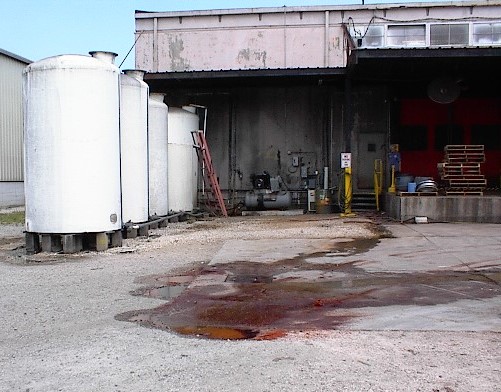
  Hazardous Chemical Spill to Sewer Outside Manufacturing Plant
Hazardous Chemical Spill to Sewer Outside Manufacturing Plant

Because the Oil Pollution Act of 1990, which amended the Clean Water Act, broadly defines the term "oil," the sheen rule applies to both petroleum and non-petroleum oils and fats (e.g., vegetable oil, milk). The regulation also provides several exemptions from the notification requirements.

Need more information of federal, State or local spill reporting requirements? Contact Caltha at info@calthacompany.com


Caltha LLP | Your EH&S Compliance, 
Auditing and EMS/SMS Partner

Saturday, February 10, 2018

Groundwater Health Limits For Trimethylbenzene

The Health Risk Assessment Unit at the Minnesota Department of Health has started a full review of three trimethylbenzene (TMB) isomers (1,2,3-trimethylbenzene; 1,2,4-trimethylbenzene; and 1,3,5-trimethylbenzene). TMB isomers are produced during petroleum refining and production of a component of gasoline. TMB isomers are also used in the production of solvents and are ingredients in paints, dyes, cleaning agents, and automotive fluids.

 The review will consider if the existing Health Risk Values (HRL) for the three trimethylbenzene compounds in groundwater are adequately protective. This review is particularly significant because trimethylbenzene compounds are commonly detected in soil and groundwater at petroleum release sites, such as leaking underground storage tank (LUST) sites.

 MDH previously developed water guidance for 1,2,4- and 1,3,5-trimethylbenzene. Re-evaluation of these contaminants in 2017 resulted in a recommendation for full review.


Caltha LLP | Your Environmental Site Assessment
and Remediation Partner

Monday, January 22, 2018

Changes To Minnesota Water Based Health Risk Limits

The Minnesota Department (MDH) is proposing amendments to the Health Risk Limits (HRLs) Rules and to adopt new and updated human health-based water guidance values into rule. The chemicals proposed for amendment include herbicides and other pesticides, polyaromatic hydrocarbons (PAH) and volatile organic compounds (VOC). Below is a listing of chemicals MDH is considering in its rule revision:

Chemical Name Previously adopted values in HRL Rule?
Acenaphthene Yes
Acetochlor Yes
Acetochlor ESA Yes
Acetochlor OXA Yes
Alachlor Yes
Chloroform Yes
Clothianidin No
Cyanazine Yes
cis-1,2-Dichloroethene Yes
2,4-Dichlorophenoxyacetic acid (2,4-D) Yes
Dieldrin Yes
Dinoseb No
S-Ethyl-N,N-dipropylthiocarbamate (EPTC) Yes
Fluoranthene Yes
Perfluorobutyrate (PFBA) Yes
Perfluorooctanoic Acid (PFOA) and Salts Yes
Perfluorooctane Sulfonate (PFOS) and Salts Yes
Pyrene Yes
Tetrahydrofuran No
Thiamethoxam No
1,1,1-Trichloroethane Yes
Vinyl Chloride Yes

MDH will accept written comments on the proposed rules amendments through Wednesday, February 21, 2018.

Wednesday, January 17, 2018

Benzo[a]pyrene, BaP Water Health Risk Review

The Minnesota Department of Health-Health Risk Assessment Unit has started a full review of benzo[a]pyrene or BaP. BaP is a chemical formed from combustion, and is one of a larger class of chemicals known as polycyclic aromatic hydrocarbons (PAHs). Sources of BaP can include industrial processes, cigarette smoke, grilled or broiled foods, wood fires, motor vehicle emission, and many other activities that involve combustion of organic material. BaP is classified as carcinogenic to humans by the U.S. Environmental Protection Agency (EPA) and the International Agency for Research on Cancer (IARC). Minnesota Department of Health previously developed water guidance for BaP in 2012 and the current review will update that guidance if deemed necessary.

Tuesday, January 2, 2018

Revisions To Narrative Water Quality Standards Proposed By EPD

The Georgia Environmental Protection Division has proposed revisions to existing rules in the Rules for Water Quality Control at 391-3-6-.03(5)(b) and (c). These proposed changes are intended to clarify certain narrative water quality standards that could apply to all Waters of the State.

The current rules state, in relevant part:
 (b) All waters shall be free from oil, scum and floating debris associated with municipal or domestic sewage, industrial waste or other discharges in amounts sufficient to be unsightly or to interfere with legitimate water uses.
(c) All waters shall be free from material related to municipal, industrial or other discharges which produce turbidity, color, odor or other objectionable conditions which interfere with legitimate water uses.

The proposed revisions would modify these sections (as noted in red) as follows:
 (b) All waters shall be free from oil, scum and floating debris associated with municipal or domestic sewage, industrial waste or other discharges in amounts sufficient to be unsightly or to unreasonably interfere with the designated use of the water body.
(c) All waters shall be free from material related to municipal, industrial or other discharges which produce turbidity, color, odor or other objectionable conditions which unreasonably interfere with the designated use of the water body.

 Comments on the proposed revision are due by January 31, 2018.

  Click here for other regulatory updates for Georgia.

Friday, November 3, 2017

Minnesota Issues Update To Drinking Water Guidance For Glyphosate

The Minnesota Department of Health (MDH) has issued its final health-based guidance on glyphosate. Glyphosate is a widely used herbicide that controls broadleaf weeds, grasses, and aquatic plants. Glyphosate is sold under several different trade names, including products sold for home use. It is applied in agriculture, forestry, lawn care, and gardening.


The Minnesota Department of Agriculture (MDA) regularly monitors groundwater and surface water for glyphosate. It is frequently detected at low levels in both urban and rural surface waters. In 2016, the highest level detected in surface water was 42.8 micrograms per liter (μg/L. MDA’s groundwater monitoring efforts have not yet detected glyphosate in groundwater. Since 1993, glyphosate has only been detected four times in Minnesota public drinking water systems, at levels that range from 1.1 to 39 μg/L


Glyphosate has been under review by MDH. Based on available information, MDH developed a guidance value of 500 ppb for glyphosate in drinking water. Glyphosate is a primary drinking water contaminant of the federal Safe Drinking Water Act and has a Maximum Contaminant Level (MCL) and Maximum Contaminant Level Goal (MCLG) of 700 ppb.

Monday, October 2, 2017

Trade Group Needed Technical Support For Public Comments In Water Standard

Caltha LLP Project Summary

Project: Water Quality Standards Development Public Comment Support
Client: Agricultural Products Sector Trade Group
Location(s): Kansas


Key Elements: Water quality standards development, Public testimony, Public comments


Overview: Caltha LLP provided technical support to the trade group and its members to address proposed water quality standards for atrazine, a widely used herbicide. A draft ambient water quality standard for atrazine was being proposed by the US EPA Office of Water and was being reviewed by the Federal Insecticide, Fungicide, and Rodenticide Act (FIFRA) Science Advisory Panel, convened in Washington DC. Caltha reviewed underlying studies and other research which were being used to derive the proposed standards, and provided oral testimony before the SAP on technical concerns regarding the calculation of the proposed standards.


For more information on Caltha LLP services, go to the Caltha Contact Page.


Sunday, December 15, 2013

Permitting of Waste Discharge Permit To Pennsylvania Designated Trout Stream

Caltha LLP Project Summary

Project: Waste Discharge Permit To Pennsylvania Designated Trout Stream
Client: National manufacturer
Location(s): Pennsylvania

Key Elements: Preparation of waste discharge application; Preparation of public notice and local government notification

Overview: This project was to prepare application materials and other required submittals to apply for an NDPES discharge permit for discharge of industrial wastes to a designated cold water fishery in Pennsylvania. Work included sampling and analysis of wastewater discharges and a non-stormwater discharge survey to certify the elimination of all illicit discharges. Permit was issued for discharge which maintained quality of receiving water .

For more information on Caltha LLP services, go to the Caltha Contact Page

Caltha LLP provides expert consulting services to public and private sector clients nationwide to address water quality standards, wastewater permitting and assessing potential impacts of chemicals in the aquatic environment. Caltha LLP Aquatic Toxicology / WQ Standards Services Website


Thursday, April 4, 2013

Federal Water Quality Standards Withdrawn For New Jersey, Puerto Rico and San Francisco Bay

EPA is taking final action to amend the federal regulations to withdraw certain human health and aquatic life water quality criteria applicable to waters of New Jersey, Puerto Rico, and California's San Francisco Bay. In 1992, EPA promulgated the National Toxics Rule or NTR to establish numeric water quality criteria for 12 states and two Territories, including New Jersey, Puerto Rico and parts of California. On May 18, 2000, EPA then promulgated a final rule known as the California Toxics Rule or CTR in order to establish numeric water quality criteria for priority toxic pollutants for the State of California that were not previously in the NTR.

These two states and one territory have now adopted, and EPA has approved, water quality criteria for certain pollutants included in the NTR. Because California, New Jersey, and Puerto Rico now have water quality standards that meet the requirements of the Clean Water Act, EPA has determined that the federally promulgated criteria are no longer needed for these pollutants. Therefore EPA is proposing to amend the federal regulations to withdraw those certain criteria applicable to California, New Jersey, and Puerto Rico. The withdrawal of the federally promulgated criteria will enable New Jersey, Puerto Rico, and California to implement their EPA-approved water quality criteria. This final rule is effective on June 3, 2013.

The water quality criteria subject to this action address both freshwater and marine standards and cover a wide range of priority pollutants, including metals, volatile organic chemicals, PAHs, PCBs, pesticides and others EPA has proposed to withdraw only one federal water quality criteria for California - the saltwater aquatic life cyanide criteria for San Francisco Bay. Other criteria for cyanide for waters in California that are currently part of the NTR or CTR will remain unchanged in the federal regulations

.Caltha LLP provides expert consulting services to public and private sector clients nationwide to address water quality standards, wastewater permitting and assessing potential impacts of chemicals in the aquatic environment.
Caltha LLP Aquatic Toxicology / WQ Standards Services Website


Wednesday, March 13, 2013

Water Standards For Selenium Proposed In Kentucky

The Kentucky Division of Water has been conducting the triennial review of the state’s water quality standards since early 2012. Recently, the agency had proposed regulations address a number of changes to the water quality standards and included proposed deletion of the acute water quality criterion for selenium.

The proposal to delete the acute standard was based on the Division’s findings that the current state standard, which was derived from USEPA guidance, was not based on sound science. USEPA Region 4 commented on the proposed deletion and identified three options: (1) leave the current acute criterion in place and wait for release of any revisions to USEPA’s selenium criteria, (2) adopt the acute criterion from USEPA’s current national guidance, or (3) adopt an alternate criterion based on other scientifically defensible guidance.

In response, the Division conducted a survey of recent studies of selenium toxicity to aquatic species and determined that it was appropriate to develop state-specific water quality criteria for selenium. The agency is proposing an acute criterion for warmwater aquatic habitat of 258 ug/L, with an alternate calculation option depending on the sulfate concentration that is present. The proposed chronic criterion for warmwater aquatic habitat is 8.6 ug/g (dry weight) of whole fish tissue or 19.2 ug/g (dry weight) of fish egg/ovary tissue. The analysis of fish tissue is triggered when the water column concentration of selenium exceeds 5.0 ug/L. If the water column result is less than or equal to 5.0 ug/L, the water body is meeting is aquatic life uses. If the water column result is greater than 5.0 ug/L, then the next step is to determine whether the site is attaining the fish tissue or egg/ovary tissue criterion.

Caltha LLP provides expert consulting services to public and private sector clients nationwide to address water quality standards, wastewater permitting and assessing potential impacts of chemicals in the aquatic environment.

Caltha LLP Aquatic Toxicology / WQ Standards Services Website


Changes Considered To Minnesota Water Quality Regulations

The Minnesota Pollution Control Agency is proposing to make some revisions to Minnesota Rules Chapters 7050, 7052 and 7053. The amendments proposed for this rulemaking are the result of the 2008 public review of Minnesota’s water quality standards. The scope of this rulemaking will address six areas of the water quality standards:
  1. River Eutrophication — numeric nutrient standards for rivers, streams, the Mississippi River pools and Lake Pepin.
  2. Total Suspended Solid (TSS) — replacement of the existing standard for water turbidity with more scientifically accurate, region-specific TSS standards.
  3. Human Health Methods — updates to the methods used for establishing the Class 2 chronic water quality standards to protect human health.
  4. Process for listing Class 2A waters as cold water communities/trout waters — refine the current basis for classifying Class 2A waters to also include biological information on the aquatic communities.
  5. Class 3 Waters — update the basis for identifying Class 3 waters and remove the numeric standards.
  6. Other changes to use classifications — regular review and updates to Class 1 and Class 7 Limited Resource Value Waters.
The MPCA anticipates to conduct public informational meetings in Summer 2013 and to publish proposed rules in Fall 2013. Final rules would be effective in Spring 2014

Caltha LLP provides expert consulting services to public and private sector clients in Minnesota and nationwide to address water quality standards, wastewater permitting and assessing potential impacts of chemicals in the aquatic environment.

Caltha LLP Aquatic Toxicology / WQ Standards Services Website


Friday, December 21, 2012

Revised Total Coliform Rule For Public Water Supplies

U.S. Environmental Protection Agency (EPA) has updated the rule for pathogens in drinking water, including setting a limit for the bacteria E. coli to better protect public health.  Public water systems must comply with the requirements of the Revised Total Coliform Rule beginning April 1, 2016.

Under the revised rule, public drinking water systems are required to notify the public if a test exceeds the maximum contaminant level (MCL) for E. coli in drinking water. If E. coli or other indications of drinking water contamination are detected above a certain level, drinking water facilities must assess the system and fix potential sources and pathways of contamination. High-risk drinking water systems with a history of non-compliance must perform more frequent monitoring. The revised rule provides incentives for small drinking water systems that consistently meet certain measures of water quality and system performance.

Caltha LLP provides expert consulting services to public and private sector clients nationwide to address water quality standards, wastewater permitting and assessing potential impacts of chemicals in the aquatic environment.

Caltha LLP Aquatic Toxicology / WQ Standards Services Website


Tuesday, December 18, 2012

Wildrice - Sulfate Standard Upheld By Court

The Minnesota Court of Appeals has affirmed a lower-court ruling that upholds the state's limit on sulfate in wild rice waters. In its decision, the appellate court said it lacked jurisdiction in the case but that it still affirmed a state district court decision in May to dismiss the case.

 The original lawsuit was filed by the Minnesota Chamber of Commerce in 2010 asking the court to throw out the state's 1973 sulfate rule, claiming it was unfounded, based on poor science and overly restrictive, especially for the state's mining industry. In May 2012, a district court judge ruled in favor of the state, the state sulfate limit of 10 mg/L was appropriate.

The 10 mg/L limit also was the subject of a 2011 state law that attempted to block enforcement of the state regulation. But the federal Environmental Protection Agency overruled state lawmakers, saying the sulfate limit had to be enforced under the federal Clean Water Act unless the state could prove it wasn't necessary.

Caltha Water Quality and Water Quality Standards Consultant Services

Caltha LLP provides expert consulting services to public and private sector clients nationwide to address water quality standards, wastewater permitting and assessing potential impacts of chemicals in the aquatic environment.


Tuesday, November 27, 2012

New EPA Recreational Water Quality Criteria for Beaches

In response to an order from a U.S. District Court and as required by the Beaches Environmental Assessment and Coastal Health Act of 2000, the U.S. Environmental Protection Agency (EPA) has released new recreational water quality criteria for beaches and waters year round. The criteria provide states and communities with scientific information that they can use to determine whether water quality is safe for the public and when to issue an advisory or a beach closure. EPA has also provided a variety of other tools to help states evaluate and manage recreational waters.

The new criteria are based on several recent health studies and use a broader definition of illness to recognize that symptoms may occur without a fever, including a number of stomach ailments. EPA also narrowed from 90 days to 30 days the time period over which the results of monitoring samples may be averaged. This shortened time period especially accounts for heavy rainfall that can wash pollution into rivers, lakes or the ocean or cause sewer overflows.

The recommendations include:

  1. A short-term and long-term measure of bacteria levels that are to be used together to ensure that water quality is properly evaluated.
  2. Stronger recommendations for coastal water quality so public health is protected similarly in both coastal and fresh waters.
  3. A new rapid testing method that states can use to determine if water quality is safe within hours of water samples being taken.
  4. An early-alert approach for states to use to quickly issue swimming advisories for the public.
  5. Tools that allow states to predict water quality problems and identify sources of pollution, as well as to develop criteria for specific beaches.
  Caltha LLP provides expert consulting services to public and private sector clients nationwide to address water quality standards, wastewater permitting and assessing potential impacts of chemicals in the aquatic environment. Caltha LLP Aquatic Toxicology / WQ Standards Services Website


Friday, November 2, 2012

IDNR Proposed Changes To Use Designations For Iowa Rivers

The Iowa Department of Natural Resources (DNR) is holding public meetings across the state to gather input on proposed water quality standards designated use changes for selected rivers and streams in Iowa. These changes are intended to enhance the protection of aquatic life and recreational uses in these waters. Rivers affected include segments of the Iowa River, Cedar River, Des Moines River and several others

Meetings will be held in:

  • Atlantic: Nov. 13.
  • Clear Lake: Nov. 8
  • Independence: Nov. 28
  • Spencer: Nov. 5
  • Washington: Nov. 27
  • West Des Moines: Nov. 19

Caltha LLP provides expert consulting services to public and private sector clients nationwide to address water quality standards, wastewater permitting and assessing potential impacts of chemicals in the aquatic environment.
 Caltha LLP Aquatic Toxicology / WQ Standards Services Website


Thursday, August 30, 2012

Revisions To Oklahoma Water Quality Standards

The Oklahoma Water Resources Board (OWRB) Water Quality Programs Division is currently planning the 2012 triennial revision of Oklahoma’s Water Quality Standards (OAC 785:45) and the Implementation of Oklahoma’s Water Quality Standards (WQS) (OAC 785:46). In contrast to previous interim revisions, this revision may consider all aspects of the WQS document. OWRB has already announced that it is currently planning revisions to the human health criteria.

OWRB is requesting public input on any additional revisions stakeholders believe should be considered. Because is the first time the entire WQS document has been completely opened since 2009, OWRB anticipates a significant number of revision requests. Informal meetings will be held on the following dates, to discuss the potential revision topics in the Board Room at the OWRB Oklahoma City office.

  • Friday, September 14, 2012, 9:30 A.M.
  • Thursday, October 11, 2012, 2:00 P.M.

The meetings will be followed with a formal Notice of Rulemaking Intent, formal proposed language, a Rule Impact Statement, a formal comment period from mid-November through December 2012 and a formal public hearing in January 2013.

Caltha LLP provides expert consulting services to public and private sector clients nationwide to address water quality standards, wastewater permitting and assessing potential impacts of chemicals in the aquatic environment.

Caltha LLP Aquatic Toxicology / WQ Standards Services Website


San Francisco Bay Delta Estuary Action Plan Released

The U.S. Environmental Protection Agency has released an Action Plan that proposes seven measures for improving water quality, restoring aquatic habitat, and improving the management of the San Francisco Bay Delta Estuary. The release of the Action Plan follows the agency’s analysis concluding that existing federal and state water quality programs are not adequately safeguarding the ecosystem.

The Action Plan responds to findings and recommendations made following EPA’s Advance Notice of Proposed Rulemaking in 2011 that sought public input on the effectiveness of existing federal and state water quality protection programs. The Action Plan prioritizes the following seven actions to be pursued in partnership with the State Water Resources Control Board, the Regional Water Boards for the Central Valley and San Francisco Bay, the California Department of Pesticide Regulation, and numerous other state and federal agencies:

  • By 2013, propose a standard for selenium discharges from cities, farms, and oil refineries;
  • By 2013, achieve organophosphate pesticide water quality goals in Sacramento County urban streams;
  • By 2014, set new estuarine habitat standards, including salinity, to improve conditions for aquatic life;
  • By 2017 establish a monitoring and assessment program for water quality in the Delta;
  • Ensure that EPA’s pesticide regulation program more fully considers the effects that pesticides have on aquatic life;
  • Restore and rebuild wetlands and floodplains to sequester drinking water contaminants, methylmercury, and greenhouse gases and make the Delta more resilient to floods, earthquakes, and climate change;
  • Support the development and implementation of the Bay Delta Conservation Plan.

Caltha LLP provides expert consulting services to public and private sector clients nationwide to address water quality standards, wastewater permitting and assessing potential impacts of chemicals in the aquatic environment.
Caltha LLP Aquatic Toxicology / WQ Standards Services Website


Monday, June 25, 2012

Approval Of NDEQ New And Revised Water Quality Standards

EPA has completed its review of the Nebraska Department of Environmental Quality’s new and revised water quality standards. EPA’s June 22, 2012, decision letter provides a more detailed description of EPA’s review. The Clean Water Act (CWA) requires states to review water quality standards every three years and submit new or revised standards to EPA for review and approval.

The approved standards include:
  • new and revised surface water criteria to protect aquatic life and human health;
  • new and revised public drinking water supply criteria;
  • numeric nutrient criteria for lakes; and
  • new use designations for four lakes.

Caltha LLP provides expert consulting services to public and private sector clients nationwide to address water quality standards, wastewater permitting and assessing potential impacts of chemicals in the aquatic environment.

Caltha LLP Aquatic Toxicology / WQ Standards Services Website