Showing posts with label Regulations. Show all posts

Thursday, August 30, 2018

Revisions Proposed To Arizona Wastewater Rules

Arizona Department of Environmental Quality (ADEQ) is currently conducting its the Clean Water Act Triennial Review Rulemaking. The draft rule is make several changes to existing State rules. ADEQ proposes substantial changes to the following areas of the Rule:
  • Definitions [A.A.C. R18-11-101]
  • Mixing Zones [A.A.C. R18-11-114]
  • Variances [A.A.C. R18-11-122]
  • Numeric Water Quality Criteria [18 A.A.C. 11, Art. 1, Appendix A]
  • E. Coli Numeric Water Quality Criteria [A.A.C. R18-11-109(A)]
  • Site Specific Standard Criteria [A.A.C. R18-11-115]
  • Enforcement [A.A.C. R18-11-120]
  • Listed Site Specific Standards [18 A.A.C. 11, Art. 1, Appendix C]
ADEQ proposes minor technical corrections or clarifications to:
  • Antidegradation [A.A.C. R18-11-107]
  • Nutrient Criteria Language [A.A.C. R18-11-109(F)]
  • Listed Surface Waters and Designated Uses [18 A.A.C. 11, Art. 1, Appendix B]
ADEQ is not proposing to make changes to the following areas of the RUle in this Triennial Review:
  • Selenium Numeric Water Quality Criteria [18 A.A.C. 11, Art. 1, Appendix A]
  • Outstanding Arizona Waters [A.A.C. R18-11-112]
  • Surface Water Definition [A.A.C. R18-11-101]
  • Effluent Dependent Water Definition or Applicability [A.A.C. R18-11-101 & A.A.C. R18-11-113]

Saturday, March 17, 2018

Do I Need Permit To Apply Pesticide To Dry Waterbody?

FAQ: Do I Need An NPDES Permit To Apply Pesticide That Is Not Approved For Water Application?


Possibly. According to US EPA, some pesticide labels refer to “water” and not “waters of the United States.” It is possible that some pesticide products that are not approved for use in “water” may result in discharges to waters of the United States.

For example, waters of the United States may be dry at the time of pesticide application, and there may be situations where pesticides are applied to temporarily dry waterbodies using pesticides labeled for terrestrial or seasonally-dry use. The National Pollutant Discharge Elimination System (NPDES) permit requirements apply regardless of whether the waters of the United States are wet or dry at the time of the discharge.


Caltha LLP | Your Water Quality Standards 
and Permit Limits Partner

FAQ: What Is "Residual Designation Authority"?

FAQ: What is EPA's Residual Designation Authority?

EPA can use its "residual designation" authority under 40 CFR 122.26(a)(9)(i)(C) and (D) to require NPDES permits for stormwater discharges or other category of discharges on a case-by-case basis when it determines that:
  • the discharges contribute to a violation of water quality standards,,
  • are a significant contributor of pollutant to federally protected surface waters, or
  • controls are needed for the discharge based on wasteload allocations that are part of "total maximum daily loads" (TMDLs) that address the pollutant(s) of concern.

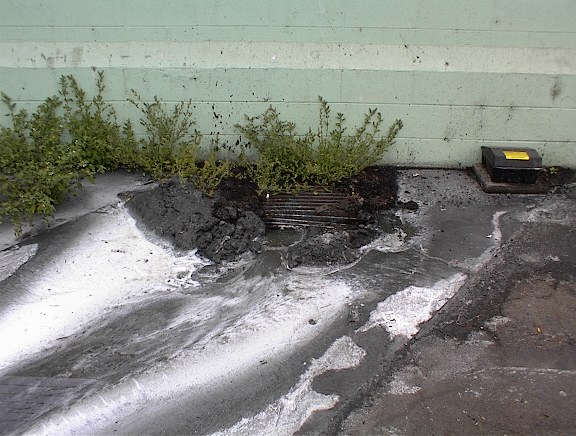
Industrial Waste Discharge To Storm Sewer Identified During SWPPP inspection
Industrial Waste Discharge To Storm Sewer


Caltha LLP provides expert consulting services to public and private sector clients nationwide to address water quality standards, wastewater permitting and assessing potential impacts of chemicals in the aquatic environment.
Caltha LLP Aquatic Toxicology / WQ Standards Services Website

Saturday, February 24, 2018

Do Oil Sheens Need To Be Reported? What Is Sheen Rule?

Under the Clean Water Act, the "sheen rule" provides the framework for determining whether an oil spill should be reported to the federal government. Federal regulation requires the person in charge of a facility or vessel responsible for discharging oil that may be "harmful to the public health or welfare" to report the spill. The regulation establishes the criteria for determining whether an oil spill may be harmful to public health or welfare, thereby triggering the reporting requirements:
  • · Discharges that cause a sheen or discoloration on the surface of a body of water;
  • · Discharges that violate applicable water quality standards; and
  • · Discharges that cause a sludge or emulsion to be deposited beneath the surface of the water or on adjoining shorelines.
These reporting criteria are independent of local or State spill reporting requirements. Therefore, spills might be reportable even if State spill reporting thresholds are not exceeded.

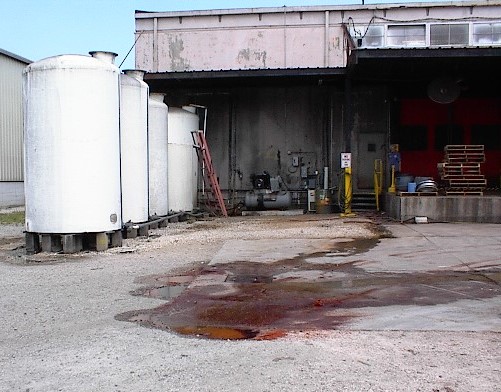
  Hazardous Chemical Spill to Sewer Outside Manufacturing Plant
Hazardous Chemical Spill to Sewer Outside Manufacturing Plant

Because the Oil Pollution Act of 1990, which amended the Clean Water Act, broadly defines the term "oil," the sheen rule applies to both petroleum and non-petroleum oils and fats (e.g., vegetable oil, milk). The regulation also provides several exemptions from the notification requirements.

Need more information of federal, State or local spill reporting requirements? Contact Caltha at info@calthacompany.com


Caltha LLP | Your EH&S Compliance, 
Auditing and EMS/SMS Partner

Tuesday, February 13, 2018

Iowa Proposes Rules To Create New General Wastewater Permits

The Iowa Department of Natural Resources (DNR) has proposed two general discharge permits to cover two types of common and generally low risk discharges. DNR plans to issue two new National Pollutant Discharge Elimination System (NPDES) general permits known as General Permit #8 (GP8) and General Permit #9 (GP9). GP8 allows for discharges of hydrostatic test water (water used to test the integrity of a pipe or tank), underground storage tank ballast water (water used to weight a tank to facilitate underground installation), and water associated with installation, repair, and replacement of potable water lines. GP9 allows for discharges from dewatering associated with construction and small residential geothermal heating and cooling systems. IDNR is proposing to include eligibility criteria and Best Management Practices. These will ensure that discharges will comply with water quality standards. Most permittees will be automatically authorized to discharge. Only a few higher-risk dischargers will need to submit a Notice of Intent. There is no fee for either permit. DNR is seeking public comment on proposed rules that will create two new general permits. DNR will hold three public hearings across the state in March:
  • Wednesday, Mar. 7, 4 p.m. at the Coralville, IA Public Library
  • Thursday, Mar. 8, 4 p.m. at the Harlan, IA Public Library
  • Wednesday, Mar. 14, 4 p.m. at the Urbandale, IA Public Library
Caltha LLP | Your Air Permit, Wastewater Permit, 
Storm Water Permit Partner

Sunday, January 28, 2018

Waters of the United States Definition Addressed By Supreme Court

On January 22, 2018, the Supreme Court unanimously decided a procedural issue determining the court in which challenges to the meaning of the term “Waters of the United States” (WOTUS) may be brought. The choice of court is significant because it affects the resources needed to litigate the merits of challenges, sets the statute of limitations for filing lawsuits and helps determine whether actions can be challenged in subsequent civil or criminal proceedings.

Immediate Impact of Waters of US Decision

The decision requires that any challenge to the current meaning of WOTUS must be brought in the federal district court rather than in the federal court of appeals and allowed pending litigation in the district courts to continue. Lifting the stay puts the Obama-era WOTUS definition back into effect and forces any future litigation to occur throughout the United States wherever there is a challenge to the WOTUS definition, unless it is able to get a stay in the pending litigation.

Why is Waters of the US Definition Important?

WOTUS is a key term impacting the scope of Clean Water Act. The EPA and Corps of Engineers issued the definition in May 2015. The rule was widely criticized, with many, such as farmers, home builders, and developers, claiming that the rule impermissibly allowed EPA to regulate private land. Others felt the rule narrowed federal jurisdiction. In the Supreme Court, the current Administration argued that any challenges to the meaning of WOTUS must be brought in a court of appeals; this argument was rejected in the court decision. Under the Clean Water Act, the uncertainty as to the scope of the WOTUS rule affects whether a Federal discharge permit (NPDES permit) is required and the scope of permits needed to discharge wastewater and storm water. It also impacts whether real estate contains federally-regulated wetlands.

Monday, January 22, 2018

Changes To Minnesota Water Based Health Risk Limits

The Minnesota Department (MDH) is proposing amendments to the Health Risk Limits (HRLs) Rules and to adopt new and updated human health-based water guidance values into rule. The chemicals proposed for amendment include herbicides and other pesticides, polyaromatic hydrocarbons (PAH) and volatile organic compounds (VOC). Below is a listing of chemicals MDH is considering in its rule revision:

Chemical Name Previously adopted values in HRL Rule?
Acenaphthene Yes
Acetochlor Yes
Acetochlor ESA Yes
Acetochlor OXA Yes
Alachlor Yes
Chloroform Yes
Clothianidin No
Cyanazine Yes
cis-1,2-Dichloroethene Yes
2,4-Dichlorophenoxyacetic acid (2,4-D) Yes
Dieldrin Yes
Dinoseb No
S-Ethyl-N,N-dipropylthiocarbamate (EPTC) Yes
Fluoranthene Yes
Perfluorobutyrate (PFBA) Yes
Perfluorooctanoic Acid (PFOA) and Salts Yes
Perfluorooctane Sulfonate (PFOS) and Salts Yes
Pyrene Yes
Tetrahydrofuran No
Thiamethoxam No
1,1,1-Trichloroethane Yes
Vinyl Chloride Yes

MDH will accept written comments on the proposed rules amendments through Wednesday, February 21, 2018.

Tuesday, January 2, 2018

Revisions To Narrative Water Quality Standards Proposed By EPD

The Georgia Environmental Protection Division has proposed revisions to existing rules in the Rules for Water Quality Control at 391-3-6-.03(5)(b) and (c). These proposed changes are intended to clarify certain narrative water quality standards that could apply to all Waters of the State.

The current rules state, in relevant part:
 (b) All waters shall be free from oil, scum and floating debris associated with municipal or domestic sewage, industrial waste or other discharges in amounts sufficient to be unsightly or to interfere with legitimate water uses.
(c) All waters shall be free from material related to municipal, industrial or other discharges which produce turbidity, color, odor or other objectionable conditions which interfere with legitimate water uses.

The proposed revisions would modify these sections (as noted in red) as follows:
 (b) All waters shall be free from oil, scum and floating debris associated with municipal or domestic sewage, industrial waste or other discharges in amounts sufficient to be unsightly or to unreasonably interfere with the designated use of the water body.
(c) All waters shall be free from material related to municipal, industrial or other discharges which produce turbidity, color, odor or other objectionable conditions which unreasonably interfere with the designated use of the water body.

 Comments on the proposed revision are due by January 31, 2018.

  Click here for other regulatory updates for Georgia.

Sunday, November 5, 2017

Ohio Proposes Changes To Permit To Install Rule

Ohio EPA has proposed rule changes in Ohio Administrative Code (OAC) Chapter 3745-42. Chapter 3745-42 covers the requirements for wastewater permits to install (PTIs).The rules are being amended as part of the five-year rule review requirements in Ohio Revised Code section 106.


The Agency has reviewed these rules and has identified necessary changes. New exemptions are being considered, with qualifiers, for:
•building sewers, sanitary sewer replacement projects, in situ sanitary sewer repairs,
•repair or replacement of a treatment works component, media or equipment, modifications within existing treatment works infrastructure,
•disposal systems designed to be a best management practice under a storm water National Pollutant Discharge Elimination System (NPDES) permit,
•treatment works pilot study, •installation of on line monitoring or process control equipment, •installation of odor control equipment,
•remodel or replacement of buildings or laboratories located at a treatment works, and
•filtration systems, ion exchange systems and oil skimmers on process tanks that serve manufacturing equipment.


Click here to review examples of Caltha projects related to permitting. Click here for examples of project Caltha has conducted for clients located in Ohio.

Tuesday, October 3, 2017

Minnesota Antidegradation Rules Revised By MPCA

The MPCA has completed rulemaking to replace the existing nondegradation rules found in Minn. R. ch. 7050 with new antidegradation rules. The new rules became effective on November 21, 2016. One of the notable revisions was MPCA changing terms from nondegradation to antidegradation to be consistent with federal regulations, EPA guidance and other states’ rules and implementation procedures.


Some of the key changes to the antidegradation rules are:
  • Aligning rules with federal antidegradation regulatory policy and EPA guidance.
  • Incorporating two sets of antidegradation standards addressing the differences between individual and general permits.
  • Developing procedures specific to the various activities the MPCA regulates.
  • Providing clarity regarding the information needed of applicants and sequence of actions taken by the MPCA in making antidegradation determinations.
  • Identifing the factors the MPCA considers in conducting reviews.
  • Establishing a process for determining the water quality baseline.
  • Providing limited exemptions from antidegradation procedures.
  • Providing for compensatory mitigation for the loss of existing uses resulting from physical alterations.
Click here for more information on Caltha's Water Quality and Discharge Permitting services.


Monday, October 2, 2017

New York Sewage Pollution Right to Know Act

The Sewage Pollution Right to Know Act ("SPRTK"), which took effect on May 1, 2013, requires owners and operators of publicly owned treatment works ("POTWs") and publicly owned sewer systems ("POSSs") to report untreated and partially treated sewage discharges to DEC and health authorities immediately, but in no case later than two hours from discovery of the discharge. Partially treated sewage discharged directly from a POTW that is in compliance with a DEC approved plan or permit does not need to be reported. The rule also requires owners and operators of POTWs and POSSs to continue reporting for each day after the initial report is made until the discharge terminates. The rule defines a "POSS" as a municipally-owned system that discharges to a POTW owned by another municipality. A POSS is not required to obtain a SPDES permit.


DEC and NYSDOH will use sewage reports to evaluate and respond to incidents based on the severity of the potential environmental and public health impact. Reporting of sewage discharges may be used to assist DEC in making decisions on the closing of shellfish lands pursuant to 6 NYCRR section 41.4 and prohibiting shellfish activities pursuant to 6 NYCRR sections 42.17 and 47.4. DEC will also use sewage reports to direct wastewater utilities to take short term corrective action and to determine wastewater utility liability. DEC may take formal or informal enforcement action against wastewater utilities, including assessment of penalties and the institution of permanent corrective measures.


Reported sewage discharge information may also be used by NYSDOH and local health departments to assess the potential impact on public water supplies pursuant to 10 NYCRR Subpart 5-1 and to take corrective measures, if needed. NYSDOH and local health departments may use this information to provide guidance and assistance to private water supplies when contamination events occur and to make decisions on the regulation of bathing beaches pursuant to Public Health Law section 225 and 10 NYCRR Subpart 6-2.


The proposed rule would require owners and operators of POTWs and POSSs to notify the municipality where the discharge occurred and adjoining municipalities of untreated and partially treated sewage discharges within four hours of discovery. The rule would also obligate these entities to notify the general public of any such discharges to surface water within the same four hour time frame as these discharges may present a threat to public health.

Caltha LLP provides expert consulting services to public and private sector clients nationwide to address water quality standards, wastewater permitting and assessing potential impacts of chemicals in the aquatic environment. Caltha LLP Aquatic Toxicology / WQ Standards Services Website


Revision To Arizona Rules on Management of Reclaimed Water

ADEQ is considering changes to all the reclaimed water rules and expects to publish proposed rule changes, likely in the fall of 2016,


Reclaimed water is highly treated wastewater from a wastewater treatment plant. A.R.S. § 49-201(32). Reclaimed water has uses such as for irrigation. Using reclaimed water offsets and conserves potable water for human consumption and domestic purposes.


The Arizona Department of Environmental Quality (ADEQ) seeks to amend R18-9-704 in order to allow incidental runoff of reclaimed water under certain conditions. This rulemaking would be limited to amending only R18-9-704, as ADEQ is working with stakeholders to consider other changes to the reclaimed water rules.


Caltha LLP provides expert consulting services to public and private sector clients nationwide to address water quality standards, wastewater permitting and assessing potential impacts of chemicals in the aquatic environment. Caltha LLP Aquatic Toxicology / WQ Standards Services Website


Indiana Revision To Rules On POTW Interference By Industrial Discharges

Indiana Department of Environmental Management (IDEM) has proposed a revision to State rules related to industrial pretreatment of wastewater. The pretreatment rules apply to industrial wastes being discharged to a Publically Owned Treatment Works, or POTW. The existing definition of "interference" in State rules is more stringent than the federal definition. IDEM is proposing to amend 327 IAC 5-17-11 to be consistent with 40 CFR 403.3(k).


Existing state rule at 327 IAC 5-17-11 defines "interference" as occurring if one of three listed conditions occurs at the POTW due to a discharge or discharges from other sources. The listed conditions include a discharge or discharges that:
  • inhibit or disrupt the POTW,
  • cause a violation of any of the POTW's NPDES permit requirements, and
  • prevent the use of the POTW's sewage sludge or its sludge disposal method.
The federal definition of "interference" ties the conditions and causing a violation of any requirement of the POTW's NPDES permit together so that all have to occur before interference has occurred


The rule change was preliminarily adopted on 08/10/2016, however an effective date is yet to be determined.


Caltha LLP provides expert consulting services to public and private sector clients nationwide to address water quality standards, wastewater permitting and assessing potential impacts of chemicals in the aquatic environment. Caltha LLP Aquatic Toxicology / WQ Standards Services Website


Revised EPA Methods For Pesticides,and Organics

EPA has finalized specific changes to analytical test procedures that are used by industries and municipalities to analyze the chemical, physical, and biological components of wastewater and other environmental samples that are required by Clean Water Act regulations and their NPDES permit. The changes include revised EPA methods and revised methods published by voluntary consensus standard bodies, such as ASTM International and the Standard Methods Committee. EPA added certain methods reviewed under the Alternate Test Procedures (ATP) program to Code of Federal Regulations (CFR), Title 40 Part 136 and clarifying the procedures for EPA approval of nationwide and limited use ATPs.
New EPA Methods finalized include 608.3, 611, 624.1 and 625.1
  • EPA Method 608.3, Organochlorine Pesticides and PCBs
  • EPA Method 611, Haloethers.
  • EPA Method 624.1, Purgeables by GC/MS.
  • EPA Method 625.1, Base/Neutrals and Acids by GC/MS.
EPA revised existing Methods 1600, 1603, 1680, and 1682. This rule implements changes for EPA microbiological methods 1600, 1603, 1680, and 1682 that correct typographical or other errors that EPA identified in the methods after publication.


Tuesday, July 30, 2013

EPA Proposes Rule Requiring Electronic Submittal For NPDES Permit Information and Data

EPA is proposing rules that would require electronic reporting in place of the current paper-based NPDES reports. The proposed regulation would require permittees and regulators to use existing, available information technology to electronically report information and data related to the NPDES permit program in lieu of filing written reports. EPA believes the proposal will allow better allocation and use of limited program resources and enhance transparency and public accountability by providing regulatory agencies and the public with more timely, complete, accurate, and nationally-consistent sets of data about the NPDES program and potential sources of water pollution.

Given the large scope of the proposal, EPA has committed to publishing a supplemental notice should the agency receive comments on the proposed rule that require significant changes. EPA plans to publish the supplemental notice within 180 days after the public comment period for this proposed rule has closed. Comments on this proposed action must be received on or before October 28, 2013.

This proposed rule would require that reports submitted in writing now be submitted electronically by NPDES-permitted facilities to EPA through the National Environmental Information Exchange Network or to the authorized state, tribe, or territory NPDES program. This can include:
  • Discharge Monitoring Reports (DMRs),
  • Notices of Intent (NOI) to discharge in compliance with a general permit,
  • other general permit waivers,
  • certifications,
  • notices of termination (NOT) of coverage,
  • program reports

Caltha LLP provides expert consulting services to public and private sector clients nationwide to address water quality standards, wastewater permitting and assessing potential impacts of chemicals in the aquatic environment.

Caltha LLP Aquatic Toxicology / WQ Standards Services Website

Friday, April 5, 2013

General Permit For Small Dredging Operations Issued By EPA Region 10

US EPA Region 10 has issued a new federal water discharge permit operate small dredge operations in Idaho. Mining for gold using small suction dredges is a popular activity in Idaho with hundreds of dredges in use, especially during the summer. Small-scale suction dredge miners ( defined as using intake nozzles of five inches in diameter or less and engines rated at 15 horsepower or less) will need to apply for coverage under the new Clean Water Act general permit. Larger suction dredges are not covered by this general permit and need to be authorized under a separate individual permit.

To legally operate small suction dredges in Idaho, miners must apply to EPA to be covered by the EPA General Permit, as well as check with the Idaho Department of Water Resources or other state or federal authority for any additional permits that may be required.

The EPA General Permit also contains:
  • Special conditions
  • Required best practices for dredging equipment operations
  • Areas that are open to small suction dredge mining
  • Monitoring and reporting requirements

If an operator does not meet the eligibility requirements to be covered under the general permit, they can apply for an individual permit from EPA.

Caltha LLP provides expert consulting services to public and private sector clients nationwide to address water quality standards, wastewater permitting and assessing potential impacts of chemicals in the aquatic environment.
Caltha LLP Aquatic Toxicology / WQ Standards Services Website


Thursday, April 4, 2013

Federal Water Quality Standards Withdrawn For New Jersey, Puerto Rico and San Francisco Bay

EPA is taking final action to amend the federal regulations to withdraw certain human health and aquatic life water quality criteria applicable to waters of New Jersey, Puerto Rico, and California's San Francisco Bay. In 1992, EPA promulgated the National Toxics Rule or NTR to establish numeric water quality criteria for 12 states and two Territories, including New Jersey, Puerto Rico and parts of California. On May 18, 2000, EPA then promulgated a final rule known as the California Toxics Rule or CTR in order to establish numeric water quality criteria for priority toxic pollutants for the State of California that were not previously in the NTR.

These two states and one territory have now adopted, and EPA has approved, water quality criteria for certain pollutants included in the NTR. Because California, New Jersey, and Puerto Rico now have water quality standards that meet the requirements of the Clean Water Act, EPA has determined that the federally promulgated criteria are no longer needed for these pollutants. Therefore EPA is proposing to amend the federal regulations to withdraw those certain criteria applicable to California, New Jersey, and Puerto Rico. The withdrawal of the federally promulgated criteria will enable New Jersey, Puerto Rico, and California to implement their EPA-approved water quality criteria. This final rule is effective on June 3, 2013.

The water quality criteria subject to this action address both freshwater and marine standards and cover a wide range of priority pollutants, including metals, volatile organic chemicals, PAHs, PCBs, pesticides and others EPA has proposed to withdraw only one federal water quality criteria for California - the saltwater aquatic life cyanide criteria for San Francisco Bay. Other criteria for cyanide for waters in California that are currently part of the NTR or CTR will remain unchanged in the federal regulations

.Caltha LLP provides expert consulting services to public and private sector clients nationwide to address water quality standards, wastewater permitting and assessing potential impacts of chemicals in the aquatic environment.
Caltha LLP Aquatic Toxicology / WQ Standards Services Website

Wednesday, March 13, 2013

Changes Considered To Minnesota Water Quality Regulations

The Minnesota Pollution Control Agency is proposing to make some revisions to Minnesota Rules Chapters 7050, 7052 and 7053. The amendments proposed for this rulemaking are the result of the 2008 public review of Minnesota’s water quality standards. The scope of this rulemaking will address six areas of the water quality standards:
  1. River Eutrophication — numeric nutrient standards for rivers, streams, the Mississippi River pools and Lake Pepin.
  2. Total Suspended Solid (TSS) — replacement of the existing standard for water turbidity with more scientifically accurate, region-specific TSS standards.
  3. Human Health Methods — updates to the methods used for establishing the Class 2 chronic water quality standards to protect human health.
  4. Process for listing Class 2A waters as cold water communities/trout waters — refine the current basis for classifying Class 2A waters to also include biological information on the aquatic communities.
  5. Class 3 Waters — update the basis for identifying Class 3 waters and remove the numeric standards.
  6. Other changes to use classifications — regular review and updates to Class 1 and Class 7 Limited Resource Value Waters.
The MPCA anticipates to conduct public informational meetings in Summer 2013 and to publish proposed rules in Fall 2013. Final rules would be effective in Spring 2014

Caltha LLP provides expert consulting services to public and private sector clients in Minnesota and nationwide to address water quality standards, wastewater permitting and assessing potential impacts of chemicals in the aquatic environment.

Caltha LLP Aquatic Toxicology / WQ Standards Services Website

Wednesday, March 6, 2013

Use of ASTM D7575 Method For Oil and Grease Measurement

US EPA has published its final decision on its reconsideration of the methods used by NPDES permittees to test for Oil and Grease. In the 2010 proposed Methods Update Rule (MUR), EPA discussed a new method, ASTM D7575, for oil and grease. The agency subsequently published a Notice of Data Availability (NODA) on this method that provided new data and requested comment on whether and how EPA should approve the method in Part 136 as an alternative oil and grease method.

As background, EPA establishes test procedures in 40 CFR Part 136. When EPA has promulgated a test procedure for analysis of a specific pollutant, an NPDES permittee must use an approved test procedure for the specific pollutant However, 40 CFR Part 136 also recognizes that new technologies and approaches are constantly being developed, including methods for pollutants for which EPA already has an approved test procedure. The CWA allows for use of an alternate method for a specific pollutant or parameter that is different from the approved test procedure (i.e., limited use approval). Requests for such uses, along with supporting data, are made to the applicable Regional Alternate Test Procedure (ATP) Coordinator for consideration and approval.

Unlike many parameters, oil and grease is not a unique chemical entity, but is a mixture of chemical species that varies from source to source. Common substances that may contribute to oil and grease include petroleum based compounds such as fuels, motor oil, lubricating oil, soaps, waxes, and hydraulic oil and vegetable based compounds such as cooking oil and other fats. Currently, Part 136 lists EPA Method 1664A for the measurement of oil and grease.

In 2010, EPA proposed to add new and revised EPA methods to its Part 136 test procedures. Among other methods, EPA described, but did not approve, three oil and grease methods, ASTM D7575, ASTM D7066 and Standard Methods 5520. Because EPA expressed interest in the use of solvent-free methods, EPA evaluated the ASTM D7575 method for the measurement of oil and grease and announced it was re-considering its decision not to include ASTM D7575 in 40 CFR Part 136 as an alternative to EPA Method 1664A for measuring oil and grease.

After consideration, EPA concluded that ASTM D7575 is a good stand alone method for the measurement of oil and grease. However, EPA also concluded that the case has not yet been made that ASTM D7575 should be approved for nationwide use as an alternative oil and grease method. However, EPA considered various approaches for allowing its use as an alternative to approved methods. EPA has concluded such determinations should be made on a case by case basis rather than a nationwide basis.

EPAs approach to approve ASTM D7575 as an alternative oil and grease method requires permittees to demonstrate comparability (side-by-side data) to the permitting authority. To determine comparability for a specific application, with approval of the ATP Coordinator, a permittee could use the specific side by side comparison procedures. Under this approach, a permittee would only be able to use ASTM D7575 if the recommended procedures demonstrated comparability.

EPA anticipates that requests for the use of ASTM D7575 as an alternative oil and grease method could be widespread, and wants to ensure that such requests are handled consistently. EPA recommends that applicants demonstrate comparability by conducting a side-by-side comparison using the specific procedures recommended in the guidance document that was developed when Method 1664A was promulgated. Comparability could be shown if this side by side comparison demonstrates there is no significant difference between the promulgated method and ASTM D7575. EPA notes that such requests may provide sufficient additional data to allow EPA at a later date to later make a nationwide determination on the approval of ASTM D7575 as an alternative oil and grease method.

Caltha LLP provides expert consulting services to public and private sector clients nationwide to address water quality standards, wastewater permitting and assessing potential impacts of chemicals in the aquatic environment.

Caltha LLP Aquatic Toxicology / WQ Standards Services Website

Monday, January 28, 2013

Revision To Missouri NPDES Compliance Schedule Requirements

EPA Region 7 has approved Missouri's change to state water quality standards rules to provide greater flexibility in Missouri's National Pollutant Discharge Elimination System (NPDES) permit program.

The Missouri Department of Natural Resources submitted rule changes to EPA on Dec. 11, 2012, for review and approval. State regulations previously allowed no more than three years for a permittee to come into compliance with its NPDES permit. Due to the limits of current technology for controlling some pollutants, full compliance is not always possible within a three-year period. Therefore Missouri proposed new regulations that allow for a longer compliance period, in accordance with federal regulations.

Caltha LLP provides expert consulting services to public and private sector clients nationwide to address water quality standards, wastewater permitting and assessing potential impacts of chemicals in the aquatic environment.

Caltha LLP Aquatic Toxicology / WQ Standards Services Website