Showing posts with label Stormwater. Show all posts

Saturday, February 24, 2018

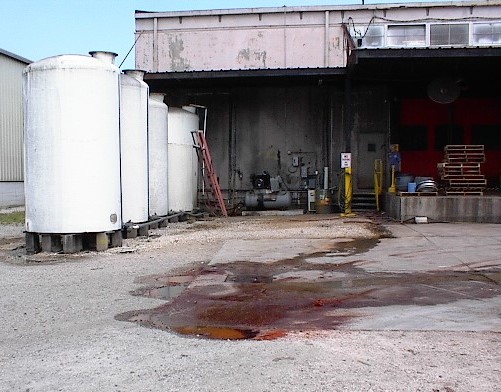
Do Oil Sheens Need To Be Reported? What Is Sheen Rule?

Under the Clean Water Act, the "sheen rule" provides the framework for determining whether an oil spill should be reported to the federal government. Federal regulation requires the person in charge of a facility or vessel responsible for discharging oil that may be "harmful to the public health or welfare" to report the spill. The regulation establishes the criteria for determining whether an oil spill may be harmful to public health or welfare, thereby triggering the reporting requirements:
  • · Discharges that cause a sheen or discoloration on the surface of a body of water;
  • · Discharges that violate applicable water quality standards; and
  • · Discharges that cause a sludge or emulsion to be deposited beneath the surface of the water or on adjoining shorelines.
These reporting criteria are independent of local or State spill reporting requirements. Therefore, spills might be reportable even if State spill reporting thresholds are not exceeded.

  Hazardous Chemical Spill to Sewer Outside Manufacturing Plant
Hazardous Chemical Spill to Sewer Outside Manufacturing Plant

Because the Oil Pollution Act of 1990, which amended the Clean Water Act, broadly defines the term "oil," the sheen rule applies to both petroleum and non-petroleum oils and fats (e.g., vegetable oil, milk). The regulation also provides several exemptions from the notification requirements.

Need more information of federal, State or local spill reporting requirements? Contact Caltha at info@calthacompany.com


Caltha LLP | Your EH&S Compliance, 
Auditing and EMS/SMS Partner

Monday, October 2, 2017

Transportation Company Needed Technical Support To Address Enforcement Action

Caltha LLP Project Summary

Project: Response To MPCA NOV For Industrial Stormwater Discharges and Non-Storm Water Discharge
Client: Transportation Sector
Location(s): Minnesota


Key Elements:  Compliance with No Exposure Certification, Compliance with prohibition of unauthorized non storm water discharge


Overview:  In a routine compliance inspection of industrial sites which had submitted no exposure certifications (NEC) being conducted by the State, this facility was found to be in non-compliance with both the conditions of the NEC and was also found to be discharging wash water without a permit. The facility was placed in enforcement action to resolve these issues.

Caltha LLP was retained by the facility to assist them in evaluating requirements to meet the NEC and to identify options for addressing unpermitted discharge. Working with facility management, it was determined that costs for necessary corrective actions to comply with the NEC were too high compared to costs to obtain and comply with an industrial stormwater discharge permit. The facility terminated its NEC and applied for permit coverage. Caltha assisted the facility in preparing a facility SWPPP using our Minnesota SWPPP template and a permit compliance plan. Alternate off-site facilities were found to eliminate the discharge of unauthorized wastewater releases from the facility.


For more information on Caltha LLP services, go to the Caltha Contact Page.


Tuesday, May 28, 2013

Keokuk, Iowa Receives Grant To Address Combined Sewer Overflows

EPA Region 7 has awarded $291,000 to the City of Keokuk, Iowa, for improvements to its sewer system. The project is expected to be completed by the fall of 2014. The purpose of the project is to construct new sanitary and storm sewer systems, which will eliminate four sewer overflows. The new sewer will provide adequate capacity for both current and anticipated future flows. A long-term strategy has been developed to eliminate six combined sewer overflows in Keokuk that drain either into the Mississippi River or Soap Creek.

Keokuk is one of 10 Iowa cities that have combined sewer systems. These systems typically use one pipe that combines sanitary sewer and storm sewer to the wastewater treatment plants during normal rainfall. However, during rainfall, this system sometimes overflows into nearby streams. and private partners.

Caltha LLP provides expert consulting services to public and private sector clients nationwide to address water quality standards, wastewater permitting and assessing potential impacts of chemicals in the aquatic environment.

Caltha LLP Aquatic Toxicology / WQ Standards Services Website


Saturday, September 22, 2012

Industrial Storm Water Training: Eagan, Minnesota Nov 30, 2012

Complying with Minnesota Industrial Stormwater Requirements
Eagan, MN
Friday, November 30, 2012

This full day training seminar will cover the requirements of the Minnesota Pollution Control Agency (MPCA) Multi-Sector General Permit (MSGP) for industrial storm water discharges. The course will begin with a discussion of the regulation of stormwater discharge under the Federal Clean Water Act, and then the specific requirements under the MPCA industrial permit, issued in 2010. This will include sector specific requirements, use of benchmark monitoring, effluent guideline monitoring and corrective action requirements. The morning session will include a discussion of additional requirements for stormwater discharges to impaired waters and other special waters identified in the MSGP.

The afternoon session will focus on implementing best managemt practices and development of a stormwater pollution prevention plan (SWPPP) at individual facilities. This will include a discussion of monitoring and reported requirements to comply with the Minnesota MSGP.

For more information or to register, go to:
Training Seminar - Complying with Minnesota Industrial Stormwater Requirements, November 30, 2012

Agenda

Industrial Stormwater Laws and Regulations
  • Federal Clean Water Act overview
  • Application of Clean Water Act to stormwater discharges

Minnesota industrial stormwater permitting process
  • Overview of permit requirements
  • Industrial sector-specific requirements
  • Benchmark monitoring/effluent monitoring
  • Corrective action triggers
Application of Rules/Permit to Individual Facilities
  • Impaired waters/TMDLs
  • Nondegradation/antidegradation requirements
  • Special waters
  • Wetlands
  • Industrial sites with potential soil/groundwater contaminants
  • Local and regional requirements

Creating Stormwater Pollution Prevention Plan (SWPPP)
  • Complying with stormwater control measure requirements
  • Describing facility
  • Providing assessment of activities and materials
  • Modification and reporting requirements
  • Availability requirements
  • Construction site runoff control

Implementing Best Management Practices (BMPs)
  • BMPs to achieve “no exposure”
  • Stormwater reduction
  • Reuse of stormwater
  • Stormwater control/management
  • Structural BMPs for treating stormwater
  • Contingency planning for extreme weather

Sampling and Annual Reporting
  • Setting up monitoring procedures
  • Collecting and evaluating samples
  • Submitting annual reports
  • Modifying BMPs

Monday, September 27, 2010

Trash and Debris TMDL For Anacostia River

U.S. EPA, the District of Columbia, and the state of Maryland have announced a new Total Maximum Daily Load (TMDL) for trash in the Anacostia River, making the Anacostia the first interstate river in the nation with such a Clean Water Act (CWA) trash limit. Each year, hundreds of tons of trash and debris are illegally dumped or washed into the Anacostia with stormwater runoff. As a result, the District and Maryland have both included the Anacostia River on their respective lists of impaired waters due to excessive quantities of trash and debris.

To restore water quality, the TMDL requires capturing or removing more than 600 tons (1.2 million pounds) of trash from the watershed annually. The District Department of Environment and Maryland Department of Environment along with members of several non-governmental organizations worked collaboratively with EPA to develop this trash TMDL for the Anacostia River. The action contributes to the larger goals of the Trash Free Potomac Watershed Initiative which has been underway for the past five years.

To complement this TMDL, the EPA, as the permitting authority for the District, and the state of Maryland are developing storm sewer permits which will serve as key implementation tools requiring municipalities in the Anacostia watershed to achieve the trash reductions required in the TMDL. In addition, continued implementation of the Combined Sewer Overflow Long Term Control Plan for the District of Columbia supports achievement of the limits.

Caltha LLP provides expert consulting services to public and private sector clients nationwide to address water quality standards, wastewater permitting and assessing potential impacts of chemicals in the aquatic environment.

Caltha LLP Aquatic Toxicology / WQ Standards Services Website

Friday, September 24, 2010

Draft Chesapeake Bay Total Maximum Daily Load, TMDL

The U.S. Environmental Protection Agency has released a draft Chesapeake Bay Total Maximum Daily Load (TMDL), designed to restore the Chesapeake Bay and its network of streams, creeks and rivers. The draft TMDL sets limits on the amount of nitrogen, phosphorus and sediment pollution discharged into the Bay and each of its tributaries by different types of pollution sources. It is designed to meet water quality standards that reflect a scientific assessment of the pollution reductions necessary to restore the health of the Bay ecosystem. The draft TMDL calls for 25% reductions in nitrogen and phosphorus and at least a 16% reduction in sediment. These reductions would be achieved by a combination of federal and state actions. The TMDL is designed to ensure that all pollution control measures to fully restore the Bay and its tidal rivers are in place by 2025, with 60% of the actions completed by 2017. The final TMDL will be established December 31.

On July 1, 2010, EPA set draft Bay-wide limits for nitrogen and phosphorus at 187.4 million and 12.5 million pounds per year, respectively, and on Aug. 13 set a range of allowable sediment pollution levels at between 6.1 and 6.7 billion pounds per year. These Bay-wide pollution limits were further divided by jurisdiction and major river basin based on modeling tools, monitoring data, peer-reviewed science, and close interaction with state partners.

The release of the draft TMDL begins a 45-day public comment period that will include 18 public meetings in all six watershed states (Virginia, Maryland, Pennsylvania, Delaware, New York and West Virginia) and the District of Columbia.

Caltha LLP provides expert consulting services to public and private sector clients nationwide to address water quality standards, wastewater permitting and assessing potential impacts of chemicals in the aquatic environment.

Caltha LLP Aquatic Toxicology / WQ Standards Services Website
Thursday, May 27, 2010

CAFO Permit Requirement - EPA Settlement Agreement

On May 25, 2010, environmental groups and the Environmental Protection Agency (EPA) signed a settlement agreement resolving their challenges filed in federal court to the 2008 Final Concentrated Animal Feeding Operations (CAFO) National Pollutant Discharge Elimination System (NPDES) Rule.

The settlement agreement requires EPA to issue a guidance document, no later than May 25, 2011, that specifies the kinds of operations and factual circumstances that EPA anticipates may trigger the duty for CAFOs to apply for NPDES permits. This guidance would be used to review and/or inspect existing unpermitted livestock facilities and determine whether they require a NPDES permit.

The settlement agreement also requires EPA to propose a rule to require all owners or operators of CAFOs to submit information to EPA, regardless of whether they discharge or propose to discharge. EPA is required to propose such a rule, receive public comment and take final action on the proposed rule by May 25, 2012.

Caltha LLP provides expert consulting services to public and private sector clients nationwide to address water quality standards, wastewater permitting and assessing potential impacts of chemicals in the aquatic environment.

Caltha LLP Aquatic Toxicology / WQ Standards Services Website
Monday, May 17, 2010

Residual Designation Authority - Application to Stormwater Discharges

Recently, industrial, commercial and municipal NPDES discharge permits have been required for dischargers in selected areas that have not previous been required to obtain such permits, under existing applicability requirements. This requirement has been in conjunction with impaired waters Total Maximum Daily Load (TMDL) studies, in which stormwater sources are a significant contributor to impairments. The basis for this extension of NPDES permit requirements has been based on the “Residual Designation Authority” given to US EPA under the Clean Water Act. The most recent examples of the use of the residual designation authority have been in Maine, Massachusetts, and Vermont.

Under the Clean Water Act “Residual Designation Authority” EPA can require permits from additional dischargers where a TMDL supports such a determination and where discharges are contributing to water quality violations. EPA’s residual designation authority is provided by Section 402(p)(2)(E) and (6) of the Clean Water Act (CWA) and promulgated by 40 CFR 122.26(a)(9)(i)(C) and (D). In Vermont and Maine, local organizations filed formal legal petitions with appropriate regulatory agencies seeking this extension on a watershed-wide basis. EPA has indicated that it intends to move forward with broader roll out to address the numerous waterways polluted as a result of stormwater runoff.

More information of stormwater permitting, stormwater regulation and compliance

Caltha LLP provides expert consulting services to public and private sector clients nationwide to address water quality standards, wastewater permitting and assessing potential impacts of chemicals in the aquatic environment.

Caltha LLP Aquatic Toxicology / WQ Standards Services Website

Tuesday, April 27, 2010

SWPPP Implemetation Training - May 19 - Plymouth, MN

SWPPP Implementation, Review & Amendment Training

Date: May 19, 2010
Time: 9 am to 11 am
Location: Plymouth, Minnesota
Cost: $125
(inquire about reduced cost for multiple attendees from same company)
Attendance is limited to individuals from permitted facilities; class size limited

This training is being provided to individuals who have responsibilities for managing implementation of the Stormwater Pollution Prevention Plan (SWPPP) for their permitted industrial facility. Topics include an overview of permit compliance requirements, documentation, annual review requirements and keeping SWPPP program up-to-date.

Training will also cover corrective action and evaluating benchmark monitoring results.

All attendees will receive a training certificate to document successful completion of training.

Why is SWPPP Implementation Training Needed?
Effective April 5, 2010, the Minnesota Pollution Control Agency (MPCA) requires specific training for certain staff at each facility permitted under the new General Permit for Industrial Stormwater Discharges.

Each facility must designate an individual responsible for implementation and management of the SWPPP program. These individuals are required under the permit to have specific training on SWPPP implementation, compliance, review and amendments.


To register, email contact information below to info@calthacompany.com
Name:
Company:
Phone:
Email:

Or call (763) 208-6430 to register or for more information


Additional SWPPP Implementation Training Sessions:
Preregister or get further information on SWPPP Implementation, Review & Amendment Training tentatively planned in July-September 2010 in:

Duluth, Minnesota
Rochester, Minnesota
Moorhead, Minnesota - scheduled June 3
Saint Cloud, Minnesota
Mankato, Minnesota - scheduled May 27

For more information or to be placed on pre-registration list for a session, email info@calthacompany.com


Also coming soon…
Stormwater inspection training………….July-October 2010
Stormwater monitoring training………....January-March 2011

Caltha LLP provides expert consulting services to public and private sector clients nationwide to address water quality standards, wastewater permitting and assessing potential impacts of chemicals in the aquatic environment.

Caltha LLP Aquatic Toxicology / WQ Standards Services Website

Wednesday, January 20, 2010

North Dakota Proposed Benchmarks for Industrial Discharge

On January 15, the North Dakota Dept of Health released its proposed industrial stormwater discharge permit. One of the key requirements for North Dakota industrial dischargers is the requirement for stormwater monitoring and stormwater benchmarks. Selected industrial sectors require monitoring and need to meet benchmarks under the proposed permit, which is on public comment until February 15, 2010.

Wood and Paper Products
Applicability: Facilities with SIC code 2421-2426 (Sawing/Planning mills), 2491 (Wood
Preserving), 2493 (Reconstituted Wood Products), and 2631 (Paperboard Plants).

Benchmark Values

• pH 6.0 – 9.0 S.U.
• Total Suspended Solids 100 mg/L
• Chemical Oxygen Demand 120 mg/L
• Phenols, Total 1.0 mg/L
• Arsenic, Total 0.1685 mg/L
• Copper, Total(1) 0.0636 mg/L


Chemical and Related Products
Applicability: Facilities with SIC code 281 (Industrial Inorganic Chemicals), 282 (Plastics and Synthetic Materials), 284 (Soaps and Detergents) and 287 (Agricultural Chemicals).

Benchmark Values

• pH 6.0 – 9.0 S.U.
• Total Suspended Solids 100 mg/L
• Total Phosphorus 2.0 mg/L
• Ammonia (2) as N 15.0 mg/L
• Nitrates as Nitrogen 0.68 mg/l
• Chemical Oxygen Demand 120 mg/L
• Zinc, Total(1) 0.117 mg/L


Food and Related Products
Applicability: Facilities with SIC code 2011 (Meat Packing Plants), 2015 (Poultry Slaughtering and Processing), and 207 (Fats and Oils).

Benchmark Values

• Oil and Grease No visible sheen (15 mg/L)
• pH 6.0 – 9.0 S.U.
• Total Suspended Solids 100 mg/L
• Ammonia (2) as N 15.0 mg/L
• Nitrates as Nitrogen 0.68 mg/l
• 5-Day BOD 30 mg/L
• Chemical Oxygen Demand 120 mg/L
• Fecal Coliform 200 colonies/100mL


Primary Metal Industries
Applicability: Any facility classified as SIC code 33.

Benchmark Values

• pH 6.0 – 9.0 S.U.
• Total Suspended Solids 100 mg/L
• Lead, Total(1) 0.0816 mg/L
• Cadmium, Total(1) 0.0159 mg/L
• Arsenic, Total(1) 0.1685 mg/L
• Copper, Total(1) 0.0636 mg/L
• Zinc, Total(1) 0.117 mg/L


Hazardous Waste Treatment, Storage and Disposal
Applicability: Facilities that treat, store or dispose of hazardous wastes.

Benchmark Values

• pH 6.0 – 9.0 S.U.
• Chemical Oxygen Demand 120 mg/L
• Ammonia (2) as N 15 mg/L
• Arsenic, Total(1) 0.1685 mg/L
• Cadmium, Total(1) 0.0159 mg/L
• Lead, Total(1) 0.0816 mg/L
• Silver, Total(1) 0.0318 mg/L
• Cyanide, Total(1) 0.0636 mg/L
• Mercury, Total(1) 0.0024 mg/L
• Selenium, Total(1) 0.2385 mg/L


Landfills and Land Application
Applicability: Facilities associated with waste disposal at landfills, land application sites and open dumps that receive industrial waste.

Benchmark Values

• pH 6.0 – 9.0 S.U.
• Total Suspended Solid 100 mg/L
• Chemical Oxygen Demand 120 mg/L
• Lead, Total(1) 0.0816 mg/L
• Oil and Grease No visible sheen (15 mg/L)

Automobile Salvage Yards
Applicability: Facilities engaged in dismantling or wrecking used motor vehicles for parts recycling/resale and for scrap; SIC code 5015.

Benchmark Values

• Oil and Grease No visible sheen (15 mg/L)
• pH 6.0 – 9.0 S.U.
• Total Suspended Solids 100 mg/L
• Chemical Oxygen Demand 120 mg/L
• Lead, Total(1) 0.0816 mg/L

Scrap Recycling Facilities
Applicability: Facility engaged in processing, reclaiming and distribution of metal scrap and other waste materials; SIC code 5093.

Benchmark Values

• Oil and Grease No visible sheen (15 mg/L)
• pH 6.0 – 9.0 S.U.
• Total Suspended Solids 100 mg/L
• Chemical Oxygen Demand 120 mg/L
• Copper, Total(1) 0.0636 mg/L
• Lead, Total(1) 0.0816 mg/L
• Zinc, Total(1) 0.117 mg/L


Air Transportation
Applicability: Regional and Primary commercial Airports and Air Force Bases

Benchmark Values

• pH 6.0 – 9.0 S.U.
• Ammonia(2) as N 15.0 mg/L
• Nitrates as Nitrogen 0.68 mg/l
• 5-Day BOD 30 mg/L
• Chemical Oxygen Demand 120 mg/L


Notes:
1 Hardness dependent; values given are based on a water hardness of 100 mg/L as CaCO3.
2 Ammonia is pH dependent; value given is based on a pH of 8.0 s.u.


Since the 1980s, the U.S. Environmental Protection Agency (EPA) has collected industry-sector data on stormwater discharge. The linked presentation provides a comparison of these historic industrial stormwater results to the many of the ADEQ stormwater benchmark concentrations. The results are discussed in context of which stormwater benchmark parameters have a higher potential for exceedance of benchmark values. This presentation also discusses which of the industrial sectors have a higher potential for exceedance of their specific benchmark values.

Note: NDDH uses the same benchmark concentrations used by EPA and many other States; although the this linked presentation was specific to Minnesota, the analysis and conclusions apply to Norh Dakota.

Link to presentation slides:

Industrial Stormwater Benchmarks – Comparison of New Minnesota Benchmark Concentrations To Historic Industry-specific Testing Results


Caltha LLP provides expert consulting services to public and private sector clients nationwide to address water quality standards, wastewater permitting and assessing potential impacts of chemicals in the aquatic environment.

Caltha LLP Aquatic Toxicology / WQ Standards Services Website


Monday, January 4, 2010

Revised Washington Benchmarks for Industrial Stormwater Discharge

Effective January 1, 20010, the Washington Department of Ecology has issued new benchmark concentrations for industrial stormwater discharges. Dischargers subject to the revised State industrial stormwater discharge permit must collect samples of stormwater discharge at least quarterly. Different levels of Corrective Action are required if dischargers exceed any of their respective benchmarks over one or more quarters.

The revised benchmarks are:

All Facilities:
Parameter Benchmark Value
Turbidity 25 NTU
pH Between 5.0 and 9.0
Oil Visible Sheen (Yes/No)
Total Copper Western WA: 14 ug/L, Eastern WA: 32 ug/L
Total Zinc 117 ug/L

Industrial Sector Specific Benchmarks:
Chemical and Allied Products ( SIC 28), Food and Kindred Products (SIC 20)
BOD5 30 mg/L
Nitrate/Nitrite 0.68 mg/L
Phosphorus 2.0 mg/L

Primary Metals (SIC 33), Metals Mining (SIC 10), Automobile Salvage and Scrap Recycling (5015 and 5093), Metals Fabricating (SIC 34)
Total Lead 81.6 ug/L
Total Petroleum Hydrocarbons 10 mg/L

Hazardous Waste Treatment, Storage and Disposal Facilities and Dangerous Waste Recyclers
COD 120 mg/L
Ammonia 2.1 mg/L
TSS 100 mg/L
Total Arsenic 150 ug/L
Total Cadmium 2.1 ug/L
Total Cyanide 22 ug/L
Total Lead 81.6 ug/L
Total Magnesium 64 ug/L
Total Mercury 1.4 ug/L
Total Selenium 5.0 ug/L
Total Silver 3.8 ug/L
Total Petroleum Hydrocarbons 10 mg/L

Air Transportation (SIC 45)
Ammonia 2.1 mg/L
BOD5 30 mg/L
COD 120 mg/L
Nitrate/Nitrite 0.68 mg/L

Timber Product Industry (SIC 24), Paper and Allied Products (SIC 26)
COD 120 mg/L
TSS 100 mg/L

Caltha LLP provides expert consulting services to public and private sector clients nationwide to address water quality standards, wastewater permitting and assessing potential impacts of chemicals in the aquatic environment.

Caltha LLP Aquatic Toxicology / WQ Standards Services Website


Tuesday, October 6, 2009

Proposed Discharge Standards for Airports

U.S. Environmental Protection Agency has proposed regulations requiring airports to collect at least some of the deicing fluid after it is used on aircrafts with a goal of cutting chemical discharge by 22 percent. The regulations would require six of the 14 major U.S. airports that are the biggest users of deicing fluid to install deicing pads or other collection systems to capture 60 percent of fluid sprayed and to install deicing pads or other collection systems. The targeted airports include:

  • New York's John F. Kennedy and LaGuardia airports,
  • Chicago's O'Hare,
  • Boston Logan International,
  • Cleveland-Hopkins International, and
  • New Jersey's Newark Liberty International

Other targeted airports already have control systems, but would also need to meet performance standards. It would then be the airports' responsibility to ensure that the collected fluid was treated and handled in accordance with requirements. Some 200 smaller facilities around the US would have to collect and treat 20 percent of the fluid by using technologies such as a glycol recovery vehicle. Airports with fewer than 1,000 yearly jet departures would not be impacted.

Caltha LLP provides expert consulting services to public and private sector clients nationwide to address water quality standards, wastewater permitting and assessing potential impacts of chemicals in the aquatic environment.

Caltha LLP Aquatic Toxicology / WQ Standards Services Website


Wednesday, April 22, 2009

Arkansas ADEQ Proposed Stormwater Permit Benchmarks

Note: This article has been updated:

Final Arkansas ADEQ Industrial Storm Water Permit

**********************************************************

The Arkansas Department of Environmental Quality (ADEQ) has proposed a revised industrial stormwater permit. The permit is open for public comment until May 11, 2009.

The proposed permit includes stormwater quality benchmarks which apply to all permitted facilities, and additional benchmarks that apply to specific industrial sectors (see below).
[Read more about stormwater benchmarks]
[Read more about how benchmarks compare to typical stormwater discharge quality]

Benchmarks being proposed were derived from a wide range of sources, including:

EPA Ambient Water Quality Criteria - Acute Values
EPA Ambient Water Quality Criteria - Chronic Values
EPA Ambient Water Quality Criteria - Lowest Observed Effect Levels (LOEL) Acute Values
EPA Ambient Water Quality Criteria - Human Health Criteria for Consumption of Water and Organisms.
North Carolina State Benchmark Values
Colorado State Water Quality Standards
National Urban Runoff Program (NURP) median concentration
Median concentration of Stormwater Effluent Limitation Guideline (40 CFR Part 419)
Laboratory derived Minimum Level (ML) and Method Detection Level (MDL).


The benchmarks being proposed under the ADEQ NPDES permit are:

All permitted facilities:

pH 6.0 - 9.0 s.u.
Chemical Oxygen Demand (COD) 120
Total Suspended Solids (TSS) 100
Oil & Grease 15

In addition to the above benchmarks, the following effluent characteristics must also be monitored for individual industrial sectors.

SECTOR A: TIMBER PRODUCTS
General Sawmills and Planing Mills (SIC 2421)
Total Zinc 0.6840 mg/L

Wood Preserving (SIC 2491)
Total Arsenic 0.16854 mg/L
Total Copper 0.0756 mg/L

SECTOR C: CHEMICALS AND ALLIED PRODUCTS
Agricultural Chemicals (SIC 2873-2879)

Nitrate plus Nitrite Nitrogen 0.68 mg/L
Phosphorus 2.0 mg/L
Total Lead 0.5188 mg/L
Total Iron 1.0 mg/L
Total Zinc 0.6840 mg/L

Industrial Inorganic Chemicals (SIC 2812-2819)
Total Aluminum 0.75 mg/L
Total Iron 1.0 mg/L
Nitrate plus Nitrite Nitrogen 0.68 mg/L

Soaps, Detergents, Cosmetics, and Perfumes (SIC 2841-2844)

Total Zinc 0.6840 mg/L
Nitrate plus Nitrite Nitrogen 0.68 mg/L

Plastics, Synthetics, and Resins (SIC 2821-2824)
Total Zinc 0.6840 mg/L

SECTOR E: GLASS, CLAY, CEMENT, CONCRETE, AND GYPSUM PRODUCTS
Clay Product Manufacturers (SIC 3251- 3259, 3261-3269)
Total Aluminum 0.75 mg/L

Concrete and Gypsum Product Manufacturers (SIC 3271-3275)

Total Iron 1.0 mg/L

SECTOR F: PRIMARY METALS

Steel Works, Blast Furnaces, and Rolling and Finishing Mills (SIC 3312-3317)
Total Zinc 0.6840 mg/L
Total Aluminum 0.75 mg/L

Iron and Steel Foundries (SIC 3321-3325)
Total Zinc 0.6840 mg/L
Total Aluminum 0.75 mg/L
Total Copper 0.0756 mg/L
Total Iron 1.0 mg/L

Rolling, Drawing, and Extruding of Nonferrous Metals (SIC 3351-3357)
Total Zinc 0.6840 mg/L
Total Copper 0.0756 mg/L

Nonferrous Foundries (SIC 3363-3369)
Total Zinc 0.6840 mg/L
Total Copper 0.0756 mg/L

SECTOR G: METAL MINING (ORE MINING AND DRESSING)
Active Copper Ore Mining and Dressing Facilities (SIC 1021)
Nitrate plus Nitrite Nitrogen 0.68 mg/L

Iron Ores; Copper Ores; Lead and Zinc Ores; Gold and Silver Ores; Ferroalloy Ores, Except Vanadium; and Miscellaneous Metal Ores (SIC Codes 1011, 1021, 1031, 1041, 1044, 1061,
1081, 1094, 1099)
Total Antimony 0.636 mg/L
Total Arsenic 0.16854 mg/ L
Total Beryllium 0.13 mg/L
Total Cadmium 0.0118 mg/L
Total Copper 0.0756 mg/L
Total Iron 1.0 mg/L
Total Lead 0.5188 mg/L
Total Mercury 0.0024 mg/L
Total Nickel 6.43 mg/L
Total Selenium 0.2385 mg/L
Total Silver 0.0107 mg/L
Total Zinc 0.6840 mg/L

SECTOR H: COAL MINES AND COAL MINING-RELATED FACILITIES
Coal Mines and Related Areas (SIC 1221-1241)
Total Aluminum 0.75 mg/L
Total Iron 1.0 mg/L

SECTOR J: MINERAL MINING AND DRESSING
Sand and Gravel Mining (SIC 1442, 1446)
Nitrate plus Nitrite Nitrogen 0.68 mg/L

SECTOR K: HAZARDOUS WASTE TREATMENT, STORAGE, OR DISPOSAL FACILITIES
Ammonia 19 mg/L
Total Magnesium 0.0636 mg/L
Total Arsenic 0.15 mg/L
Total Cadmium 0.0118 mg/L
Total Cyanide 0.0636 mg/ L
Total Lead 0.5188 mg/L
Total Mercury 0.0024 mg/ L
Total Selenium 0.2385 mg/L
Total Silver 0.0107 mg/L

SECTOR L: LANDFILLS, LAND APPLICATION SITES, AND OPEN DUMPS
Total Iron 1.0 mg/L

SECTOR M: AUTOMOBILE SALVAGE YARDS
Automobile Salvage Yards (SIC 5015)
Total Aluminum 0.75 mg/L
Total Iron 1.0 mg/L
Total Lead 0.5188 mg/L

SECTOR N: SCRAP RECYCLING FACILITIES
Scrap Recycling and Waste Recycling Facilities (SIC 5093)
Total Aluminum 0.75 mg/L
Total Copper 0.0756 mg/L
Total Iron 1.0 mg/L
Total Lead 0.5188 mg/L
Total Zinc 0.6840 mg/L

SECTOR O: STEAM ELECTRIC GENERATING FACILITIES
Total Iron 1.0 mg/L

SECTOR Q: WATER TRANSPORTATION
Water Transportation Facilities (SIC 4412-4499)
Total Aluminum 0.75 mg/L
Total Iron 1.0 mg/L
Total Lead 0.5188 mg/L
Total Zinc 0.6840 mg/L

SECTOR S: AIR TRANSPORTATION FACILITIES
Airports (SIC 4512-4581).
Ammonia 19 mg/L

SECTOR U: FOOD AND KINDRED PRODUCTS
Fats and Oils Products (SIC 2074-2079)
Nitrate plus Nitrite Nitrogen 0.68 mg/L

SECTOR Y: RUBBER, MISCELLANEOUS PLASTIC PRODUCTS, AND MISCELLANEOUS MANUFACTURING INDUSTRIES
Rubber Products Manufacturing (SIC 3011, 3021, 3052, 3053, 3061, 3069)
Total Zinc 0.6840 mg/L


SECTOR AA: FABRICATED METAL PRODUCTS
Fabricated Metal Products, except Coating (SIC 3411-3499; 3911-3915)
Total Aluminum 0.75 mg/L
Total Iron 1.0 mg/L
Total Zinc 0.6840 mg/L
Nitrate plus Nitrite Nitrogen 0.68 mg/L

Fabricated Metal Coating and Engraving (SIC 3479)
Nitrate plus Nitrite Nitrogen 0.68 mg/L
Total Zinc 0.6840 mg/L

Caltha LLP provides expert consulting services to public and private sector clients nationwide to address water quality standards, stormwater and wastewater permitting and assessing potential impacts of chemicals in the aquatic environment.

Caltha LLP Aquatic Toxicology / WQ Standards Services Website


Friday, April 3, 2009

CT Stormwater Benchmarks for Copper, Lead, Zinc and Other

The Connecticut Department of Environmental Protection (“DEP”) has proposed to revise and renew its General Permit for the Discharge of Stormwater Associated with Industrial Activity. The previous General Permit was adopted in 2002, modified in 2003, and expired on March 31, 2008.

Recent proposals by DEP have significantly lowered numeric "benchmarks" associated with industrial stormwater discharges.

The 2002 permit required annual monitoring of stormwater discharges from qualifying storm events for an expansive list of chemical and physical parameters, including whole effluent toxicity, and a set of Target Values for the parameters based on the 80th percentile of the monitoring data collected in previous years.

In 2008, DEP announced that it would be revising the permit. It proposed to update its 80th percentile Target Values to reflect the monitoring data acquired since the prior permit was adopted in 2002. DER also proposed Action Levels at the 95th percentile of prior monitoring results which would require follow-up action by registrants to investigate the source of the exceedances and modify their BMPs and SWPPP.

On February 4, 2009, DEP issued a new proposed draft which adopts ten sectors modeled on the EPA “MSGP-2008” Multisector permit, with semi-annual monitoring. The previously proposed “Action Levels” have become “Benchmarks” to track the federal language. DEP’s proposal retains the broad spectrum of parameters to be included in the monitoring program, including toxicity, but makes some sector specific adjustments. The toxicity monitoring requirement carries with it no Benchmark. The draft also adds annual monitoring for parameters for which receiving waters have been designated impaired or subject to Total Maximum Daily Load restrictions.

The Benchmark values for copper, lead and zinc are based on Connecticut’s State Water Quality Standards. The Benchmarks for remaining parameters (pH, O&G, COD, TSS, TP, TKN, and NO3), are based on the 50th percentile of the previously acquired monitoring data.

DEP expects to go to notice on a new proposal in April 2009. In the meantime, the DEP has published notice that it intends to extend the 2002 General Permit once again until September 30, 2010.

Caltha LLP provides expert consulting services to public and private sector clients nationwide to address water quality standards, wastewater permitting and assessing potential impacts of chemicals in the aquatic environment.

Caltha LLP Aquatic Toxicology / WQ Standards Services Website


Sunday, March 15, 2009

Use of Aquatic Life Standards As Stormwater Benchmark Values

On July 6, 2009, the Minnesota Pollution Control Agency (MPCA) released the draft of its proposed multi-sector industrial stormwater discharge general permit. This permit, once promulgated, will replace the existing industrial stormwater permit, which expired in October of 2002.

The MPCA draft permit is of interest outside of Minnesota because of the numerous unique requirements that MPCA has included. Many of these go well beyond other current State general permits, and even the most recent US EPA general permit (“MSGP-2008”). Unique features of the MPCA permit include special stormwater antidegradation requirements, design and performance requirements for stormwater infiltration, requirements for mercury minimization, and others.

One unique feature of the draft MPCA general permit is the use of Aquatic Life Standards as Stormwater Benchmarks. Stormwater benchmarks are used to evaluate the effectiveness of stormwater Best Management Practices (BMP). MPCA is currently proposing to use some Final Acute Values (FAV) and “Great Lakes” derived water quality standards as stormwater benchmarks. For other proposed benchmarks, “Best Professional Judgment” is the basis for the values.

MPCA is proposing to use FAV that apply to cold water fisheries or “trout streams” (Class 2A) for a number of benchmark chemicals, including:

Aluminum
Ammonia
Arsenic
Cadmium
Chromium
Copper
Cyanide
Lead
Nitrogen
Phenol
Selenium
Silver
Zinc

For some of these chemicals, MPCA is apparently considering water quality-based adjustments, based on parameters such as hardness, pH, temperature, etc.

These water quality-based benchmarks, as proposed, would not apply to all industrial categories. The industry sectors that would be subject to one or more water quality derived benchmarks include:

Sector A - Timber Products
Sector C - Chemical and Allied Products Manufacturing
Sector E - Glass, Clay, Cement, Concrete, and Gypsum Products
Sector I - Oil and Gas Extraction and Refining
Sector K - Hazardous Waste Treatment, Storage, or Disposal Facilities
Sector L - Landfills, Land Application Sites, and Open Dumps
Sector M - Automobile Salvage Yards
Sector N - Scrap Recycling and Waste Recycling Facilities
Sector Q - Water Transportation
Sector U - Food and Kindred Products
Sector X - Printing and Publishing
Sector Y - Rubber, Miscellaneous Plastic Products, and Miscellaneous Manufacturing
Industries
Sector Z - Leather Tanning and Finishing
Sector AA - Fabricated Metal Products
Sector AC - Electronic and Electrical Equipment and Components

Looking for other sector information? Click here for information on proposed stormwater requirements for a specific sector.

Caltha LLP provides expert consulting services to public and private sector clients nationwide to address water quality standards, wastewater permitting and assessing potential impacts of chemicals in the aquatic environment.

Caltha LLP Aquatic Toxicology / WQ Standards Services Website


Saturday, March 14, 2009

Polycyclic Aromatic Hydrocarbons PAH in Stormwater Discharges

Collaborative studies by the City of Austin, TX, and the U. S. Geological Survey have identified coal-tar based sealcoat as a major and previously unrecognized source of polycyclic aromatic hydrocarbon (PAH) contamination. Several PAHs are suspected human carcinogens and are toxic to aquatic life.

Studies in Austin, Texas, showed that particles in runoff from coal-tar based sealcoated parking lots have concentrations of PAHs that are about 65 times higher than concentrations in particles washed off parking lots that have not been sealcoated. Biological studies, conducted by the City of Austin in the field and in the laboratory, indicate that PAH levels in sediment contaminated with abraded sealcoat are toxic to aquatic life and are degrading aquatic communities.

Laboratory studies included toxicity tests conducted with waters collected downstream of areas which received seal-coating, and representative control areas. These studies led the researchers to estimate that about 13% of Greater Austin area streams had PAH concentrations high enough to be toxic to benthic invertebrates.

This research has led the City of Austin to ban the use of coal-tar sealants for roads, parking lots, driveways, and other paved areas.

Caltha LLP provides expert consulting services to public and private sector clients nationwide to address water quality standards, wastewater permitting and assessing potential impacts of chemicals in the aquatic environment.

Caltha LLP Aquatic Toxicology / WQ Standards Services Website


Sunday, March 8, 2009

Turbidity Effluent Limits For Industrial - MS4 Stormwater Permits

US EPA has recently proposed effluent limits on turbidity for stormwater discharges from larger construction sites.

[Read more about Construction Stormwater Discharge Effluent Limits].

This has prompted many industrial and municipal stormwater permitees to speculate on whether or not similar effluent limits will be proposed under Multi-sector General Permits (MSGP) or Municipal Separate Storm Sewer System ("MS4") permits.

The simple answer is that almost anything is possible.

However, the establishment of construction site effluent limits has some important differences that may not be easily transferred to effluent limits for industrial or MS4 permits. Some of these differences include:


  1. Effluent limits proposed for larger construction sites are based on a specific stormwater treatment method that is added to the stormwater treatment pond already required for smaller sites. Without the requirement to install a pond, the additional treatment may not be economically-feasible. Unless specific structural BMPs, like ponds, are required for industrial or MS4 dischargers, it would be difficult to translate the construction site effluent limits. Because of the nature of industrial and MS4 discharges, requiring treatment ponds would be difficult.


  2. In general, the types of activities and stormwater handling practices associated with industrial and MS4 discharges will be significantly broader compared to construction sites. Therefore, again, translating the proposed effluent limits to industrial and MS4 dischargers would be difficult.

Given these factors, it may be difficult to demonstrate that similar Best Available Technology used to calculate effluent limits for construction site discharges could be equally applied to other types of discharges.


Caltha LLP provides expert consulting services to public and private sector clients nationwide to address water quality standards, wastewater permitting and assessing potential impacts of chemicals in the aquatic environment.

For more information on Stormwater Permitting & Compliance Services, go to:
Caltha LLP SWPPP - Stormwater Services Website


Stormwater Benchmark Values - Benchmarks for TSS

About one-third of US States include chemical monitoring in their general stormwater discharges permits. Over time, this percentage has been increasing as States revise their permits as they expire.

[Read about recent trends in industrial stormwater permit requirements across US]

For States that require chemical analysis of stormwater samples, “benchmark” concentrations or values are often included. Benchmark concentrations can be specified for a number of different chemical parameters, but the more common chemicals which are assigned benchmarks include total suspended solids (TSS), biochemical oxygen demand (BOD), chemical oxygen demand (COD), nutrients and heavy metals.

Benchmark values differ from permit limits. In a typical wastewater NPDES permit, limits may be specified for chemical parameters; if any of the limits are exceeded, it becomes a violation of the permit and may be subject to enforcement action.

Benchmark values are intended to provide a measurement of the effectiveness of the stormwater pollution prevention plan (SWPPP). Exceeding a benchmark does not directly result in a permit violation. However, permits typically require facilities to reevaluate their SWPPP and to take prompt corrective action after a benchmark value is exceeded. Failure to take prompt corrective action if a benchmark value is exceeded can be a permit violation and subject to enforcement action.

Benchmark values tend to be fairly stringent. For example, a common benchmark concentration for total suspended solids (TSS) is 100 mg/L. To put this concentration into perspective, it is roughly equivalent to 1 teaspoon of sediment added to 14.5 gallons of water.

As a sector example, US EPA tested the stormwater discharge at 185 transportation and warehousing facilities. The average TSS was reported as 466 mg/L and half the facilities sampled exceeded 159 mg/L (Federal Register Vol. 60, No. 189). Based on these data, over one-half of transportation and warehouse sites would not meet the 100 mg/L benchmark.

Caltha LLP provides expert consulting services to public and private sector clients nationwide to address water quality standards, wastewater permitting and assessing potential impacts of chemicals in the aquatic environment.

For more information on Stormwater Permitting & Compliance Services, go to:
Caltha LLP SWPPP - Stormwater Services Website


Thursday, March 5, 2009

Turbidity Effluent Limits for Stormwater Discharges

In December 2008, US EPA published proposed effluent limits for stormwater discharges from construction sites. The proposed rules included a numeric effluent limit of 90 NTU. NTUs are a standard measurement of turbidity in water and of suspended material in the water.

[Read more about proposed stormwater effluent standards]

Benchmark values and previous stormwater effluent limits have always been expressed as Total Suspended Solids (TSS). Turbidity is related to TSS, however the relationship between turbidity and TSS is not always direct, and will be affected by a number of different factors.

Stormwater benchmark concentrations for TSS usually range from 100 to 250 mg/L. Using a few typical conversions between NTU and TSS, it is predicted that an effluent limit of 90 NTU will be roughly equivalent to 45 to 65 mg/L expressed as TSS. Therefore, it is projected that the proposed stormwater effluent limit is about one-half the lowest current benchmark concentration for TSS.

[Read more about the use of stormwater benchmark values]

Caltha LLP provides expert consulting services to public and private sector clients nationwide to address water quality standards, wastewater permitting and assessing potential impacts of chemicals in the aquatic environment.

Caltha LLP Aquatic Toxicology / WQ Standards Services Website


Wednesday, March 4, 2009

Stormwater Antidegradation Requirements for Tier 2, 2.5, 3 Waters

The US EPA Multi-sector General Permit promulgated in 2008 (“MSGP-2008”) includes antidegradation requirements that apply to new and/or expanded discharges of stormwater from regulated industrial sites.

[What is an Antidegradation Policy?]

EPA’s approach to antidegradation requirements is based on three categories of “special” waters – Tier 2, Tier 2.5 and Tier 3.

[Read more about how Stormwater Antidegradation Tiers are defined]

Requirements:

Tier 2. For new or existing dischargers to Tier 2 waters, the discharger is required to notify US EPA prior to making changes at the site which “qualify the facility as a new source or that could significantly change the nature or significantly increase the quantity of pollutants discharged”. EPA may notify the facility that additional analyses, control measures, or other permit conditions are necessary to comply with the applicable antidegradation requirements, or notify the facility that an individual permit application is necessary.

Tier 2.5. Same requirements as Tier 2.

Tier 3. New or existing discharges to Tier 3 waters can not be permitted under the MSGP-2008.

Caltha LLP provides expert consulting services to public and private sector clients nationwide to address water quality standards, wastewater permitting and assessing potential impacts of chemicals in the aquatic environment.

Caltha LLP Aquatic Toxicology / WQ Standards Services Website