Showing posts with label EPA. Show all posts

Saturday, March 17, 2018

FAQ: What Is "Residual Designation Authority"?

FAQ: What is EPA's Residual Designation Authority?

EPA can use its "residual designation" authority under 40 CFR 122.26(a)(9)(i)(C) and (D) to require NPDES permits for stormwater discharges or other category of discharges on a case-by-case basis when it determines that:
  • the discharges contribute to a violation of water quality standards,,
  • are a significant contributor of pollutant to federally protected surface waters, or
  • controls are needed for the discharge based on wasteload allocations that are part of "total maximum daily loads" (TMDLs) that address the pollutant(s) of concern.

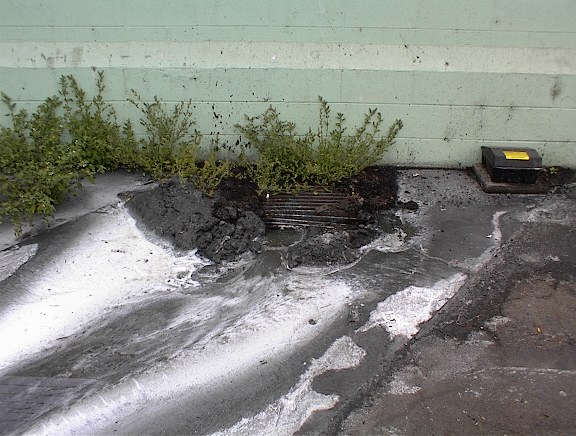
Industrial Waste Discharge To Storm Sewer Identified During SWPPP inspection
Industrial Waste Discharge To Storm Sewer


Caltha LLP provides expert consulting services to public and private sector clients nationwide to address water quality standards, wastewater permitting and assessing potential impacts of chemicals in the aquatic environment.
Caltha LLP Aquatic Toxicology / WQ Standards Services Website

Monday, October 2, 2017

Revised EPA Methods For Pesticides,and Organics

EPA has finalized specific changes to analytical test procedures that are used by industries and municipalities to analyze the chemical, physical, and biological components of wastewater and other environmental samples that are required by Clean Water Act regulations and their NPDES permit. The changes include revised EPA methods and revised methods published by voluntary consensus standard bodies, such as ASTM International and the Standard Methods Committee. EPA added certain methods reviewed under the Alternate Test Procedures (ATP) program to Code of Federal Regulations (CFR), Title 40 Part 136 and clarifying the procedures for EPA approval of nationwide and limited use ATPs.
New EPA Methods finalized include 608.3, 611, 624.1 and 625.1
  • EPA Method 608.3, Organochlorine Pesticides and PCBs
  • EPA Method 611, Haloethers.
  • EPA Method 624.1, Purgeables by GC/MS.
  • EPA Method 625.1, Base/Neutrals and Acids by GC/MS.
EPA revised existing Methods 1600, 1603, 1680, and 1682. This rule implements changes for EPA microbiological methods 1600, 1603, 1680, and 1682 that correct typographical or other errors that EPA identified in the methods after publication.


Trade Group Needed Technical Support For Public Comments In Water Standard

Caltha LLP Project Summary

Project: Water Quality Standards Development Public Comment Support
Client: Agricultural Products Sector Trade Group
Location(s): Kansas


Key Elements: Water quality standards development, Public testimony, Public comments


Overview: Caltha LLP provided technical support to the trade group and its members to address proposed water quality standards for atrazine, a widely used herbicide. A draft ambient water quality standard for atrazine was being proposed by the US EPA Office of Water and was being reviewed by the Federal Insecticide, Fungicide, and Rodenticide Act (FIFRA) Science Advisory Panel, convened in Washington DC. Caltha reviewed underlying studies and other research which were being used to derive the proposed standards, and provided oral testimony before the SAP on technical concerns regarding the calculation of the proposed standards.


For more information on Caltha LLP services, go to the Caltha Contact Page.


Tuesday, July 30, 2013

EPA Proposes Rule Requiring Electronic Submittal For NPDES Permit Information and Data

EPA is proposing rules that would require electronic reporting in place of the current paper-based NPDES reports. The proposed regulation would require permittees and regulators to use existing, available information technology to electronically report information and data related to the NPDES permit program in lieu of filing written reports. EPA believes the proposal will allow better allocation and use of limited program resources and enhance transparency and public accountability by providing regulatory agencies and the public with more timely, complete, accurate, and nationally-consistent sets of data about the NPDES program and potential sources of water pollution.

Given the large scope of the proposal, EPA has committed to publishing a supplemental notice should the agency receive comments on the proposed rule that require significant changes. EPA plans to publish the supplemental notice within 180 days after the public comment period for this proposed rule has closed. Comments on this proposed action must be received on or before October 28, 2013.

This proposed rule would require that reports submitted in writing now be submitted electronically by NPDES-permitted facilities to EPA through the National Environmental Information Exchange Network or to the authorized state, tribe, or territory NPDES program. This can include:
  • Discharge Monitoring Reports (DMRs),
  • Notices of Intent (NOI) to discharge in compliance with a general permit,
  • other general permit waivers,
  • certifications,
  • notices of termination (NOT) of coverage,
  • program reports

Caltha LLP provides expert consulting services to public and private sector clients nationwide to address water quality standards, wastewater permitting and assessing potential impacts of chemicals in the aquatic environment.

Caltha LLP Aquatic Toxicology / WQ Standards Services Website

Tuesday, July 2, 2013

2006 NPDES Pestides Rule And Related Excemptions Removed

In response to a 2009 Sixth Circuit Court of Appeals ruling that vacated the 2006 NPDES Pesticides Rule, EPA has revised regulations to remove language added by the that rule. This language had exempted the application of pesticides from National Pollutant Discharge Elimination System (NPDES) permit requirements in two circumstances:
  1. When the application of the pesticide is made directly to waters of the United States to control pests that are present in the water, and
  2. when the application of the pesticide is made to control pests that are over, including near, waters of the United States.
The final rule removes this exemption and is effective on June 27, 2013.

Caltha LLP provides expert consulting services to public and private sector clients nationwide to address water quality standards, wastewater permitting and assessing potential impacts of chemicals in the aquatic environment.

Caltha LLP Aquatic Toxicology / WQ Standards Services Website


Tuesday, May 28, 2013

Keokuk, Iowa Receives Grant To Address Combined Sewer Overflows

EPA Region 7 has awarded $291,000 to the City of Keokuk, Iowa, for improvements to its sewer system. The project is expected to be completed by the fall of 2014. The purpose of the project is to construct new sanitary and storm sewer systems, which will eliminate four sewer overflows. The new sewer will provide adequate capacity for both current and anticipated future flows. A long-term strategy has been developed to eliminate six combined sewer overflows in Keokuk that drain either into the Mississippi River or Soap Creek.

Keokuk is one of 10 Iowa cities that have combined sewer systems. These systems typically use one pipe that combines sanitary sewer and storm sewer to the wastewater treatment plants during normal rainfall. However, during rainfall, this system sometimes overflows into nearby streams. and private partners.

Caltha LLP provides expert consulting services to public and private sector clients nationwide to address water quality standards, wastewater permitting and assessing potential impacts of chemicals in the aquatic environment.

Caltha LLP Aquatic Toxicology / WQ Standards Services Website


Friday, April 5, 2013

General Permit For Small Dredging Operations Issued By EPA Region 10

US EPA Region 10 has issued a new federal water discharge permit operate small dredge operations in Idaho. Mining for gold using small suction dredges is a popular activity in Idaho with hundreds of dredges in use, especially during the summer. Small-scale suction dredge miners ( defined as using intake nozzles of five inches in diameter or less and engines rated at 15 horsepower or less) will need to apply for coverage under the new Clean Water Act general permit. Larger suction dredges are not covered by this general permit and need to be authorized under a separate individual permit.

To legally operate small suction dredges in Idaho, miners must apply to EPA to be covered by the EPA General Permit, as well as check with the Idaho Department of Water Resources or other state or federal authority for any additional permits that may be required.

The EPA General Permit also contains:
  • Special conditions
  • Required best practices for dredging equipment operations
  • Areas that are open to small suction dredge mining
  • Monitoring and reporting requirements

If an operator does not meet the eligibility requirements to be covered under the general permit, they can apply for an individual permit from EPA.

Caltha LLP provides expert consulting services to public and private sector clients nationwide to address water quality standards, wastewater permitting and assessing potential impacts of chemicals in the aquatic environment.
Caltha LLP Aquatic Toxicology / WQ Standards Services Website


Thursday, April 4, 2013

Federal Water Quality Standards Withdrawn For New Jersey, Puerto Rico and San Francisco Bay

EPA is taking final action to amend the federal regulations to withdraw certain human health and aquatic life water quality criteria applicable to waters of New Jersey, Puerto Rico, and California's San Francisco Bay. In 1992, EPA promulgated the National Toxics Rule or NTR to establish numeric water quality criteria for 12 states and two Territories, including New Jersey, Puerto Rico and parts of California. On May 18, 2000, EPA then promulgated a final rule known as the California Toxics Rule or CTR in order to establish numeric water quality criteria for priority toxic pollutants for the State of California that were not previously in the NTR.

These two states and one territory have now adopted, and EPA has approved, water quality criteria for certain pollutants included in the NTR. Because California, New Jersey, and Puerto Rico now have water quality standards that meet the requirements of the Clean Water Act, EPA has determined that the federally promulgated criteria are no longer needed for these pollutants. Therefore EPA is proposing to amend the federal regulations to withdraw those certain criteria applicable to California, New Jersey, and Puerto Rico. The withdrawal of the federally promulgated criteria will enable New Jersey, Puerto Rico, and California to implement their EPA-approved water quality criteria. This final rule is effective on June 3, 2013.

The water quality criteria subject to this action address both freshwater and marine standards and cover a wide range of priority pollutants, including metals, volatile organic chemicals, PAHs, PCBs, pesticides and others EPA has proposed to withdraw only one federal water quality criteria for California - the saltwater aquatic life cyanide criteria for San Francisco Bay. Other criteria for cyanide for waters in California that are currently part of the NTR or CTR will remain unchanged in the federal regulations

.Caltha LLP provides expert consulting services to public and private sector clients nationwide to address water quality standards, wastewater permitting and assessing potential impacts of chemicals in the aquatic environment.
Caltha LLP Aquatic Toxicology / WQ Standards Services Website


Wednesday, March 27, 2013

National Rivers and Stream Assessment Report Released

U.S. Environmental Protection Agency has released the 2008-2009 National Rivers and Stream Assessment. The survey looked at the health of thousands of stream and river miles across the country, and reported that about 55% are in poor condition for aquatic life. The report findings include:

  • Nitrogen and phosphorus are at excessive levels. An estimated 27% of the nation’s rivers and streams have excessive levels of nitrogen, and 40% have high levels of phosphorus.
  • Streams and rivers are at an increased risk due to decreased vegetation cover and increased human disturbance. These conditions can cause streams and rivers to be more vulnerable to flooding, erosion, and pollution. Approximately 24% of the rivers and streams monitored were rated poor due to the loss of healthy vegetative cover.
  • Increased bacteria levels. High bacteria levels were found in 9% of stream and river miles making those waters potentially unsafe for swimming and other recreation.
  • Increased mercury levels. More than 13,000 miles of rivers have fish with mercury levels that may be unsafe for human consumption.

Caltha LLP provides expert consulting services to public and private sector clients nationwide to address water quality standards, wastewater permitting and assessing potential impacts of chemicals in the aquatic environment.
Caltha LLP Aquatic Toxicology / WQ Standards Services Website


Monday, March 25, 2013

EPA Adds Impaired Waters To West Virginia 303D List

The U.S. Environmental Protection Agency has responded to the West Virginia Department of Environmental Protection (WVDEP) proposed list of impaired waterways in West Virginia. The list includes 1,176 waterways previously designated as impaired by the State, and an additional 255 waterways identified by EPA, based on the State’s current water quality standards.

In its response, EPA acknowledged WVDEP’s position that it is precluded by Senate Bill No. 562 from evaluating waters for aquatic life uses pending adoption of a new methodology for evaluating waterways. EPA identified the additional waterways, representing more than 1,000 miles of rivers and streams, based on its review of readily available State data. The agency reviewed the information using substantially the same methodology that West Virginia has used to review this type of data in the past.

EPA will publish a notice of the proposed additions in the federal register on or before April 15, which will begin a 30-day public comment period. EPA will review all of the comments and make changes to the proposed list as appropriate.

Caltha LLP provides expert consulting services to public and private sector clients nationwide to address water quality standards, wastewater permitting and assessing potential impacts of chemicals in the aquatic environment.
Caltha LLP Aquatic Toxicology / WQ Standards Services Website


Wednesday, March 6, 2013

Use of ASTM D7575 Method For Oil and Grease Measurement

US EPA has published its final decision on its reconsideration of the methods used by NPDES permittees to test for Oil and Grease. In the 2010 proposed Methods Update Rule (MUR), EPA discussed a new method, ASTM D7575, for oil and grease. The agency subsequently published a Notice of Data Availability (NODA) on this method that provided new data and requested comment on whether and how EPA should approve the method in Part 136 as an alternative oil and grease method.

As background, EPA establishes test procedures in 40 CFR Part 136. When EPA has promulgated a test procedure for analysis of a specific pollutant, an NPDES permittee must use an approved test procedure for the specific pollutant However, 40 CFR Part 136 also recognizes that new technologies and approaches are constantly being developed, including methods for pollutants for which EPA already has an approved test procedure. The CWA allows for use of an alternate method for a specific pollutant or parameter that is different from the approved test procedure (i.e., limited use approval). Requests for such uses, along with supporting data, are made to the applicable Regional Alternate Test Procedure (ATP) Coordinator for consideration and approval.

Unlike many parameters, oil and grease is not a unique chemical entity, but is a mixture of chemical species that varies from source to source. Common substances that may contribute to oil and grease include petroleum based compounds such as fuels, motor oil, lubricating oil, soaps, waxes, and hydraulic oil and vegetable based compounds such as cooking oil and other fats. Currently, Part 136 lists EPA Method 1664A for the measurement of oil and grease.

In 2010, EPA proposed to add new and revised EPA methods to its Part 136 test procedures. Among other methods, EPA described, but did not approve, three oil and grease methods, ASTM D7575, ASTM D7066 and Standard Methods 5520. Because EPA expressed interest in the use of solvent-free methods, EPA evaluated the ASTM D7575 method for the measurement of oil and grease and announced it was re-considering its decision not to include ASTM D7575 in 40 CFR Part 136 as an alternative to EPA Method 1664A for measuring oil and grease.

After consideration, EPA concluded that ASTM D7575 is a good stand alone method for the measurement of oil and grease. However, EPA also concluded that the case has not yet been made that ASTM D7575 should be approved for nationwide use as an alternative oil and grease method. However, EPA considered various approaches for allowing its use as an alternative to approved methods. EPA has concluded such determinations should be made on a case by case basis rather than a nationwide basis.

EPAs approach to approve ASTM D7575 as an alternative oil and grease method requires permittees to demonstrate comparability (side-by-side data) to the permitting authority. To determine comparability for a specific application, with approval of the ATP Coordinator, a permittee could use the specific side by side comparison procedures. Under this approach, a permittee would only be able to use ASTM D7575 if the recommended procedures demonstrated comparability.

EPA anticipates that requests for the use of ASTM D7575 as an alternative oil and grease method could be widespread, and wants to ensure that such requests are handled consistently. EPA recommends that applicants demonstrate comparability by conducting a side-by-side comparison using the specific procedures recommended in the guidance document that was developed when Method 1664A was promulgated. Comparability could be shown if this side by side comparison demonstrates there is no significant difference between the promulgated method and ASTM D7575. EPA notes that such requests may provide sufficient additional data to allow EPA at a later date to later make a nationwide determination on the approval of ASTM D7575 as an alternative oil and grease method.

Caltha LLP provides expert consulting services to public and private sector clients nationwide to address water quality standards, wastewater permitting and assessing potential impacts of chemicals in the aquatic environment.

Caltha LLP Aquatic Toxicology / WQ Standards Services Website


Thursday, December 6, 2012

Power Plant Effluent Guideline and Coal Disposal Rules

Environmental Protection Agency has indicated that the agency is attempting to revise its pending power plant effluent limitation guideline (ELG) and coal combustion residuals (CCR) disposal rules so that they better coordinate with each other to minimize the compliance burden they will place on the industry.

During the National Association of Regulatory Utility Commissioners (NARUC) conference, EPA Office of Water suggested that EPA is attempting to coordinate revisions of the two rules to minimize duplication and ease compliance. However, that effort is likely to be complicated by the fact that EPA has estimated that the new CCR rule will not be ready until 2014, yet it is facing a court order requiring it to issue revisions to the ELG by Dec. 15, 2013.


Caltha LLP provides expert consulting services to public and private sector clients nationwide to address water quality standards, wastewater permitting and assessing potential impacts of chemicals in the aquatic environment.

Caltha LLP Aquatic Toxicology / WQ Standards Services Website


Tuesday, November 27, 2012

New EPA Recreational Water Quality Criteria for Beaches

In response to an order from a U.S. District Court and as required by the Beaches Environmental Assessment and Coastal Health Act of 2000, the U.S. Environmental Protection Agency (EPA) has released new recreational water quality criteria for beaches and waters year round. The criteria provide states and communities with scientific information that they can use to determine whether water quality is safe for the public and when to issue an advisory or a beach closure. EPA has also provided a variety of other tools to help states evaluate and manage recreational waters.

The new criteria are based on several recent health studies and use a broader definition of illness to recognize that symptoms may occur without a fever, including a number of stomach ailments. EPA also narrowed from 90 days to 30 days the time period over which the results of monitoring samples may be averaged. This shortened time period especially accounts for heavy rainfall that can wash pollution into rivers, lakes or the ocean or cause sewer overflows.

The recommendations include:

  1. A short-term and long-term measure of bacteria levels that are to be used together to ensure that water quality is properly evaluated.
  2. Stronger recommendations for coastal water quality so public health is protected similarly in both coastal and fresh waters.
  3. A new rapid testing method that states can use to determine if water quality is safe within hours of water samples being taken.
  4. An early-alert approach for states to use to quickly issue swimming advisories for the public.
  5. Tools that allow states to predict water quality problems and identify sources of pollution, as well as to develop criteria for specific beaches.
  Caltha LLP provides expert consulting services to public and private sector clients nationwide to address water quality standards, wastewater permitting and assessing potential impacts of chemicals in the aquatic environment. Caltha LLP Aquatic Toxicology / WQ Standards Services Website


Tuesday, November 20, 2012

Changes To Missouri Impaired Waters List

On Nov. 13, 2012 , US EPA Region 7 issued the final decision on the Missouri list of impaired waters. EPA restored eight water bodies to Missouri’s list and removed one water body due to an EPA-approved pollution reduction plan. The EPA decision brings the total number of impaired waters in the state to 258.

The Missouri Department of Natural Resources (MDNR) submitted its impaired waters list to EPA for review and approval as required by the Clean Water Act (CWA). The EPA decision letter provides a more detailed description of EPA’s review and the basis for this action.

Caltha LLP provides expert consulting services to public and private sector clients nationwide to address water quality standards, wastewater permitting and assessing potential impacts of chemicals in the aquatic environment.

Caltha LLP Aquatic Toxicology / WQ Standards Services Website


Thursday, November 15, 2012

Containment and Disposal of Contaminated Water Guidance

The US EPA Office of Water has released the reference document “Containment and Disposal of Large Amounts of Contaminated Water: A Support Guide for Water Utilities”. The guide is intended to help water utilities prepare for and respond to a contamination event when rapid decision making and action is required. The guidance is applicable primarily at drinking water, wastewater, and stormwater utilities, and makes recommendations for addressing chemical, biological, and radiological (CBR) contamination events. Secondary users of the guide are decision makers involved with planning and disposal at federal, state, local, and tribal levels.

According to EPA, the guide is a voluntary document that is not legally enforceable, and contains broad recommendations that may be adapted to specific situations or incidents. It includes references to statutes and regulations, but does not change or substitute for any legal requirements. The guide provides an overview of the issues associated with containment, treatment, and disposal of contaminated water after a decision to contain the water has been made, including:

  • Potential types of containment;
  • Potential treatment methods;
  • Potential disposal options and associated considerations; and
  • Information on some of the key relevant statutes and regulations that may be applicable for containment and disposal.

According to EPA, the guide is not intended to provide recommendations on initial response activities immediately following a confirmed contamination incident; or source water, such as ground water or surface water that has not entered the drinking water, wastewater, or stormwater system. Caltha LLP provides expert consulting services to public and private sector clients nationwide to address water quality standards, wastewater permitting and assessing potential impacts of chemicals in the aquatic environment. Caltha LLP Aquatic Toxicology / WQ Standards Services Website


Tuesday, October 9, 2012

Minnesota Department of Health Grant To Reduce Mercury Exposure From Fish

The U.S. Environmental Protection Agency has awarded a $1.4 million Great Lakes Restoration Initiative (GLRI) grant to the Minnesota Department of Health (MDH) to reduce mercury exposure risk for women and children who live along Lake Superior’s north shore. Excessive blood mercury levels have been documented in infants in this area. The funding will be used to improve health screening and to develop more effective fish consumption advisories. Over the last three years, the GLRI has provided more than $320 million to clean up toxic contamination in Great Lakes Areas of Concern and to reduce the risks associated with toxic substances in the Great Lakes ecosystem.

The Grand Portage Chippewa Tribe and the Sawtooth Mountain Clinics in Grand Portage and Grand Marais, Minnesota will participate in the MDH project. Physicians affiliated with the clinics will survey consenting female patients of childbearing age about fish consumption and test blood mercury levels. Patients will also be counseled to promote safe fish consumption choices.

The work supported by the grant will build on an earlier EPA-funded study which was completed last year by MDH. In that study, 1,465 newborns in the Lake Superior Basin were tested for mercury in their blood. The study found that 8 % of the infants had mercury levels higher than those recommended as safe by EPA.


Caltha LLP provides expert consulting services to public and private sector clients nationwide to address water quality standards, wastewater permitting and assessing potential impacts of chemicals in the aquatic environment.
Caltha LLP Aquatic Toxicology / WQ Standards Services Website


Monday, August 6, 2012

Grant To Louisiana Coastal Protection and Restoration Authority

The Environmental Protection Agency has awarded the Louisiana Coastal Protection and Restoration Authority (CPRA) $100,000 to reduce hypoxia in the Gulf of Mexico. The funds will be used to develop a statewide nutrient reduction strategy for Louisiana which adopts strategic elements identified in action plans of the Gulf of Mexico Alliance and the Gulf of Mexico Hypoxia Task Force.

Because of the devastation of hurricanes Katrina and Rita in 2005, the Louisiana Legislature restructured the state's Wetland Conservation and Restoration Authority to form the CPRA. The CPRA is the single state entity with authority to articulate a clear statement of priorities and to focus development and implementation efforts to achieve comprehensive coastal protection for Louisiana.

Caltha LLP provides expert consulting services to public and private sector clients nationwide to address water quality standards, wastewater permitting and assessing potential impacts of chemicals in the aquatic environment.

Caltha LLP Aquatic Toxicology / WQ Standards Services Website

Tuesday, July 31, 2012

Water Quality Based Effluent Limitations for Phosphorus Approved

US EPA has approved the program in Wisconsin to control the discharge of phosphorus to surface waters. Wisconsin adopted the new subchapter, Wisconsin Administrative Code Chapter NR 217, Subtitle III, “Water Quality Based Effluent Limitations for Phosphorus,” in 2010, but EPA did not approve it until July 25, 2012.

Wisconsin's program will allow permit holders (such as publicly owned treatment works, or POTW) to meet phosphorus discharge requirements through partnership arrangements with others who release phosphorus. Permit holders can make such arrangements to achieve phosphorus reductions more economically. This will allow communities and other permit holders to save money while still ensuring overall phosphorus levels are reduced in the watershed.

Caltha LLP provides expert consulting services to public and private sector clients nationwide to address water quality standards, wastewater permitting and assessing potential impacts of chemicals in the aquatic environment.

Caltha LLP Aquatic Toxicology / WQ Standards Services Website

Thursday, May 24, 2012

Water Quality Standards For Florida Streams and Downstream Protection of Lakes

US EPA has released a Notice of Proposed Rule Making (NPRM) for a rule to address an order by the U.S. District Court for the Northern District of Florida from February 18, 2012 The District Court had remanded to the EPA two portions of its numeric water quality standards for nutrients in Florida that were promulgated and published on December 6, 2010.

This proposed rule will either provide additional justification for the criteria derived or derive different criteria using the reference condition approach for Florida streams and for the derivation of the downstream protective values (DPVs) for unimpaired lakes. The rule will address the likelihood of adverse impact, i.e., imbalance in natural populations of aquatic flora and fauna, occurring at concentrations greater than the stream criteria and the DPVs for unimpaired lakes.

Caltha LLP provides expert consulting services to public and private sector clients nationwide to address water quality standards, wastewater permitting and assessing potential impacts of chemicals in the aquatic environment.
Caltha LLP Aquatic Toxicology / WQ Standards Services Website

Thursday, March 29, 2012

EPA Approves TMDLs for 175 South California Water Bodies

The U.S. Environmental Protection Agency and the Los Angeles Regional Water Quality Control Board have announced a series of pollution reduction plans designed to restore 175 water bodies in Los Angeles and Ventura Counties. The pollution targets set by these plans are intended improve water quality, restore ecosystems, and protect the public by eliminating beach closures due to bacteria and improving the health of fish used for consumption.

Under the federal Clean Water Act, states are required to develop pollution reduction plans called Total Maximum Daily Loads (TMDLs) for waters that are impaired by pollutants. These plans must be approved by the EPA. The announcement is a part of a 1999 legal settlement between EPA and local environmental groups in which EPA committed to approve LA Water Board-developed TMDLs or independently establish TMDLs for a list of water bodies in the Los Angeles Region. As a result of the consent decree, 47 TMDLs have been established for 175 water bodies that address numerous pollutant impairments including elevated bacteria, metals, pesticides, PCBs and trash. Additional TMDLs will be approved or established within the next year.

EPA established four TMDLs to address pollutants and impairments for the following water bodies:

- Long Beach City beaches and Los Angeles River estuary for bacteria
- Santa Monica Bay waters for DDTs and PCBs
- Ballona Creek wetlands for sediment and exotic vegetation
- Nine Los Angeles area urban lakes for toxics, trash, nitrogen and phosphorus pollution

In addition, the EPA has approved four LA Water Board-adopted TMDLs to address pollutants and impairments for the following water bodies:
- Los Angeles and Long Beach Harbors for toxic pollutants
- Machado Lake for toxic pollutants
- Los Angeles River for bacteria
- Santa Monica Bay for trash

Caltha LLP provides expert consulting services to public and private sector clients nationwide to address water quality standards, wastewater permitting and assessing potential impacts of chemicals in the aquatic environment.

Caltha LLP Aquatic Toxicology / WQ Standards Services Website